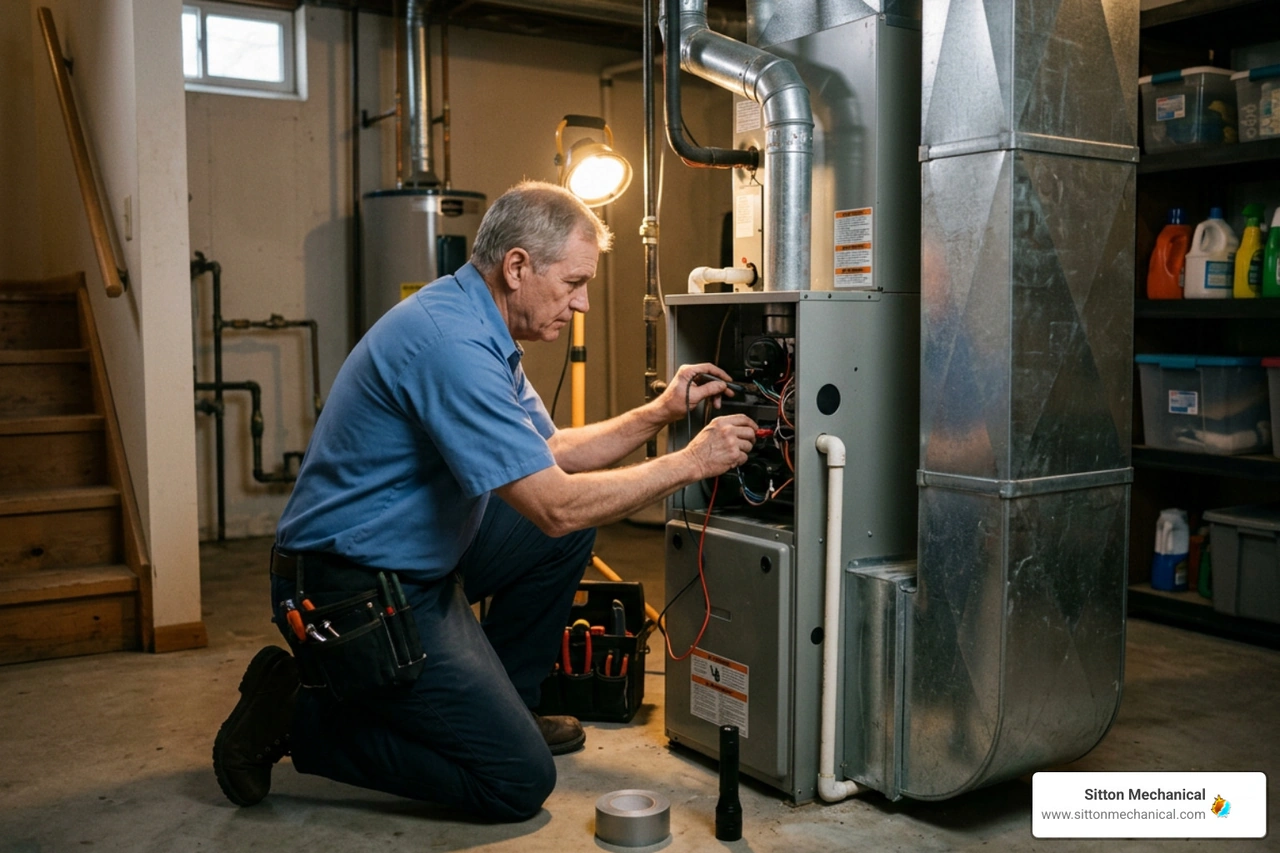
Why Reliable Residential Furnace Repair in Cushing Matters Before Winter Hits
If you need residential furnace repair in Cushing, here's a quick overview of what you should know:
- Most common issues: dirty filters, faulty igniters, thermostat problems, and short cycling
- DIY vs. professional: replace filters and check breakers yourself — gas leaks, cracked heat exchangers, and electrical faults need a pro
- When to call: any time you smell gas, see a yellow flame, or your furnace stops producing heat
- How often to service: once a year, ideally before fall, to prevent breakdowns and extend equipment life
Cushing winters are no joke. With average January lows dropping to 26°F, a furnace that fails in the middle of the night is more than an inconvenience — it's a safety issue. Nearly 50% of all heating system failures trace back to simple neglect: a clogged filter here, a skipped tune-up there. The good news is that most breakdowns are preventable.
This guide walks you through how to spot problems early, what you can safely handle yourself, and when to bring in a certified technician.
I'm Richard Sitton, and in this guide I'll share what we see most often on service calls — so you can stay warm and avoid unnecessary repairs.
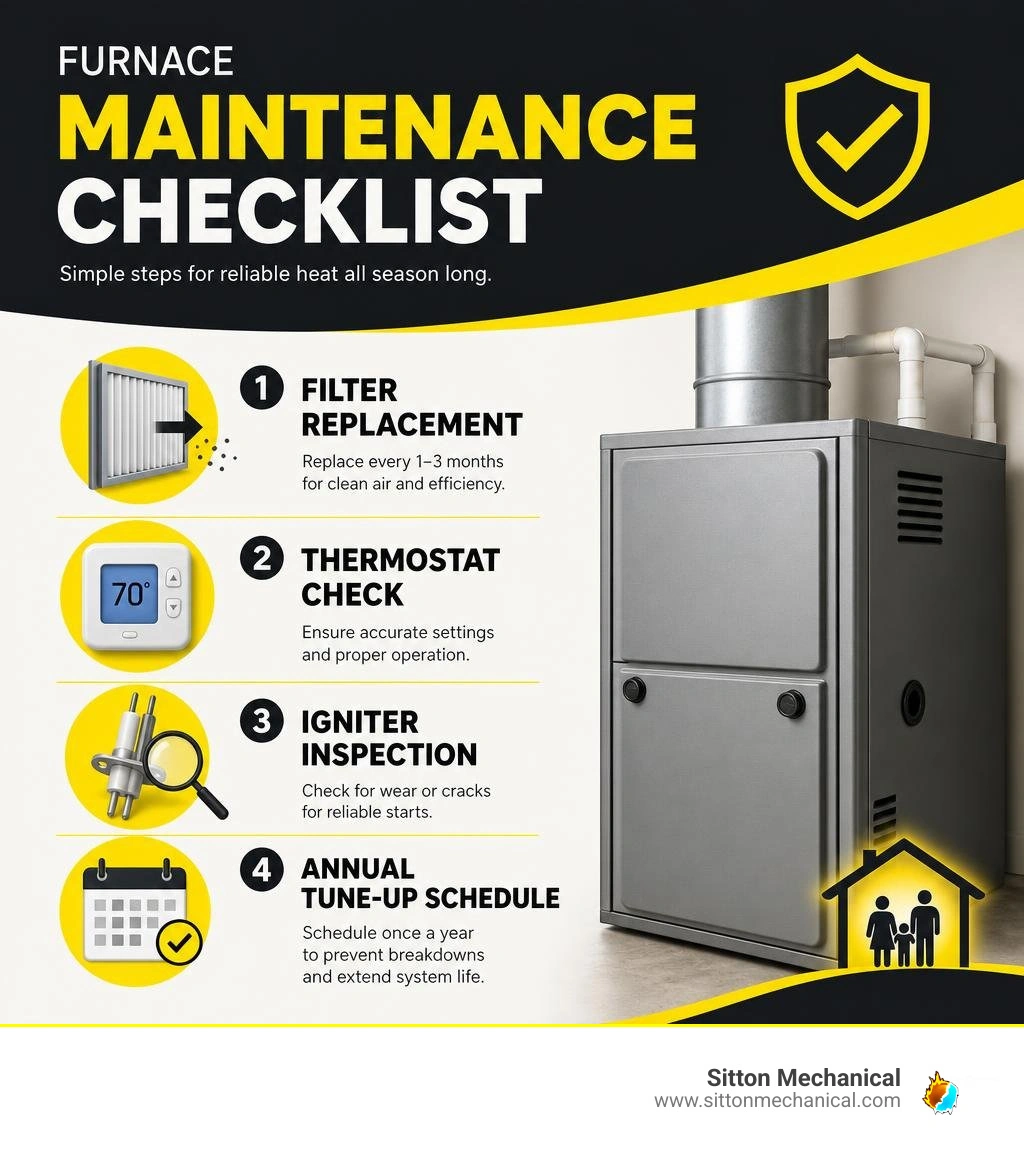
Terms related to residential furnace repair cushing:
Common Winter Heating Issues Requiring Residential Furnace Repair Cushing

When winter sweeps across Oklahoma, home heating systems work overtime to keep indoor spaces comfortable. In Cushing, average low temperatures in January drop down to 26°F, which places heavy stress on residential heating units. Approximately 75% of furnace breakdowns happen during the coldest months of the year, with January and February seeing the highest influx of service calls. When your system is operating continuously under freeze warnings, minor mechanical flaws quickly escalate into complete heating failures.
Understanding the root causes of system malfunction allows you to act before experiencing a complete loss of heat. Whether you rely on gas or electric heating, several core components are vulnerable to wear, dust, and strain during peak usage. When seeking heating repair cushing ok, knowing what is going wrong helps us restore warmth to your home faster.
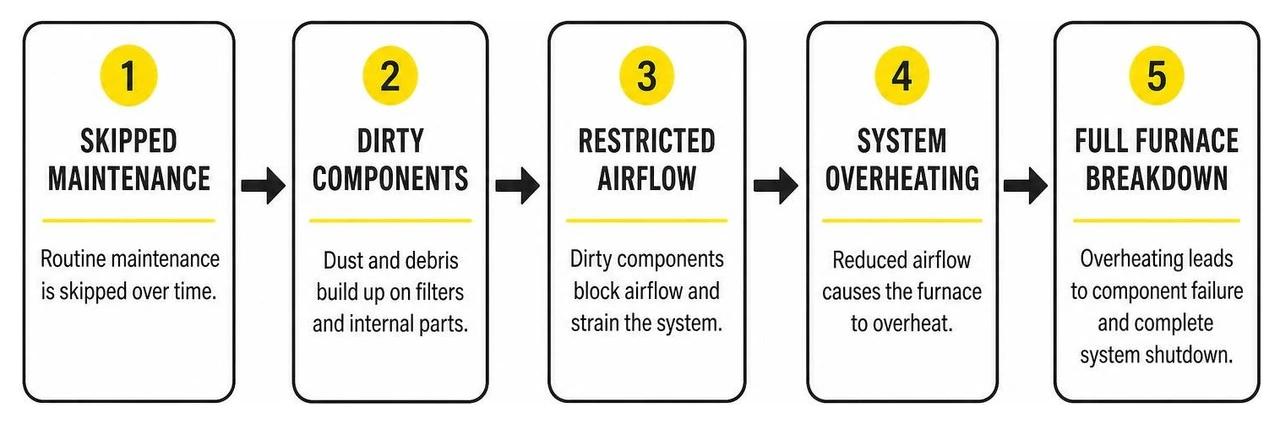
Here is a simple flowchart showing how common winter heating issues develop and lead to system failure:
Recognizing Symptoms of Residential Furnace Repair Cushing
Recognizing early warning signs keeps small repairs from turning into major household headaches. If you notice any of these typical symptoms, your system needs prompt attention:
- Restricted Airflow and Clogged Air Filters: Dust, pet dander, and household debris accumulate quickly on filter surfaces. A clogged filter starves the furnace of air, forcing the blower motor to pull extra energy while overheating internal components. This lack of airflow often triggers safety limit switches that shut the system down prematurely.
- Short Cycling: When your furnace turns on, runs for a brief minute or two, and turns off without reaching your target indoor temperature, it is "short cycling." This is often caused by overheating due to airflow restrictions, a dirty flame sensor, or a malfunctioning thermostat.
- Cold Air Exhaust: If cold air blows through your supply registers while the heating cycle is active, the heat exchanger is not transferring thermal energy, or the burner ignition has failed.
- Unusual Noises: Squealing, banging, rattling, or scraping sounds from inside the cabinet indicate mechanical problems. Squealing suggests a worn blower belt or motor bearing, while loud metallic pops can mean expanding air ducts or delayed gas ignition.
- Discolored Burner Flame: A healthy natural gas furnace burner burns with a steady, clear blue flame. If your furnace display reveals a yellow, flickering, or orange flame, it signals incomplete fuel combustion. This condition produces excess carbon monoxide and requires immediate intervention.
If your unit shows any of these signs, ignoring them can result in a broken heater cushing during a freeze, leaving your family exposed to harsh temperatures.
Safety Precautions Before Troubleshooting Residential Furnace Repair Cushing
Before opening access panels or conducting any basic homeowner checks, primary safety protocols must be followed. Gas-fired and high-voltage electrical heating systems carry inherent risks if handled carelessly.
- Shut Off Electrical Power: Locate the main switch on or near the furnace housing and switch it to the "OFF" position. You should also flip the corresponding circuit breaker in your electrical service panel.
- Isolate the Gas Valve: If your furnace burns natural gas or propane, know where the gas shutoff valve is located on the supply line. Turning the valve handle perpendicular to the pipe stops fuel flow during checks or emergency situations.
- Verify Carbon Monoxide Detectors: Carbon monoxide (CO) is an odorless, colorless gas that can leak from cracked heat exchangers or damaged flue pipes. Ensure fresh batteries are installed in all CO detectors throughout your home.
- Maintain Adequate Ventilation: Keep the area surrounding your furnace clear of clutter, storage boxes, paints, and flammable solvents. Unrestricted combustion air intake is required for safe operation.
- Conduct Visual Checks Only: Never attempt to disassemble gas lines, bypass safety limit switches, or splice high-voltage wiring yourself.
Reviewing our furnace repair cushing ok guide provides additional context on safety checks and preventative care for home units.
DIY Maintenance vs. Professional Furnace Repair

When a furnace acts up, homeowners naturally want to know if there is an easy fix they can manage themselves or if it requires expert assistance. Distinguishing between simple operational adjustments and serious mechanical repairs protects both your budget and your safety.
Quick DIY Troubleshooting Steps
Before calling for service, run through these simple, safe troubleshooting steps:
- Check Thermostat Settings: Ensure your thermostat is set to "HEAT" mode and the target temperature is set at least 3 to 5 degrees above the current room temperature. If the display screen is blank, replace the internal batteries.
- Inspect and Replace the Air Filter: Pull out your air filter and hold it up to a light source. If light cannot pass through easily, install a fresh filter with the correct dimensions and airflow direction arrows pointing toward the furnace cabinet.
- Verify Circuit Breakers: Check your home's main electrical breaker panel. If the heating circuit breaker has tripped to the middle position, flip it firmly to "OFF" and then back to "ON."
- Inspect Supply Registers and Return Grilles: Walk through your home to verify that supply vents and return air grilles are open and unobstructed by furniture, drapes, or rugs.
- Examine System Power Switches: Ensure the exterior toggle switch attached to the furnace unit or nearby wall hasn't been bumped into the "OFF" position.
Schedule a regular furnace tune up cushing ok to keep these basic components clean and working smoothly.
When to Call Professional Technicians
While changing a filter is straightforward, complex operational components require experienced hands. You should immediately contact certified technicians when encountering the following scenarios:
- Gas Odors: If you smell natural gas or sulfur (a rotten-egg odor), immediately evacuate all occupants from the home, leave the front door open, and call your gas utility provider and emergency responders from outside. Do not flip electrical switches or ignite open flames.
- Repeatedly Tripped Breakers: If the circuit breaker trips a second time after reset, do not continue flipping it back on. This indicates a severe electrical short or motor overload that requires electrical diagnosis.
- Igniter or Pilot Ignition Failure: Modern high-efficiency furnaces use hot-surface igniters or electronic spark ignition systems. These components operate with high voltage and fragile silicon nitride materials that crack easily if mismanaged.
- Cracked Heat Exchanger: The heat exchanger isolates toxic combustion gases from the air circulating inside your rooms. Detecting fractures requires specialized tools, video scopes, and flue gas analyzers.
- Blower Motor or Capacitor Failure: Blower fans utilize heavy electrical capacitors that retain high-voltage charges even when main power is disconnected.
For any of these serious component issues, schedule a professional furnace repair cushing ok service visit to restore proper, safe functionality.
For homeowners interested in general system care across surrounding communities, you can review regional resources such as HVAC Services in Glencoe, KY or explore options for Furnace Repair and Service in Perry | E. Dake Plumbing & Heating LTD. to understand standard service offerings.
Choosing a Reliable Furnace Repair Service in Cushing
Selecting the right heating service provider gives you confidence that repairs will be performed correctly, safely, and cleanly. When evaluating an hvac company cushing ok, look for clear signs of professionalism:
- Background-Checked and Certified Technicians: Ensure the company employs certified, drug-tested, and background-screened technicians who respect your home.
- Upfront Pricing and Written Guarantees: Reliable service providers evaluate your equipment thoroughly, explain what went wrong, and provide clear upfront quotes before starting any work.
- Local Availability and Fast Response Times: During deep winter freezes in Payne County, prompt service is essential. Choose a provider with local technicians who can reach your neighborhood quickly.
- Clear Communication: Look for companies that explain complex technical issues in plain English without confusing jargon.
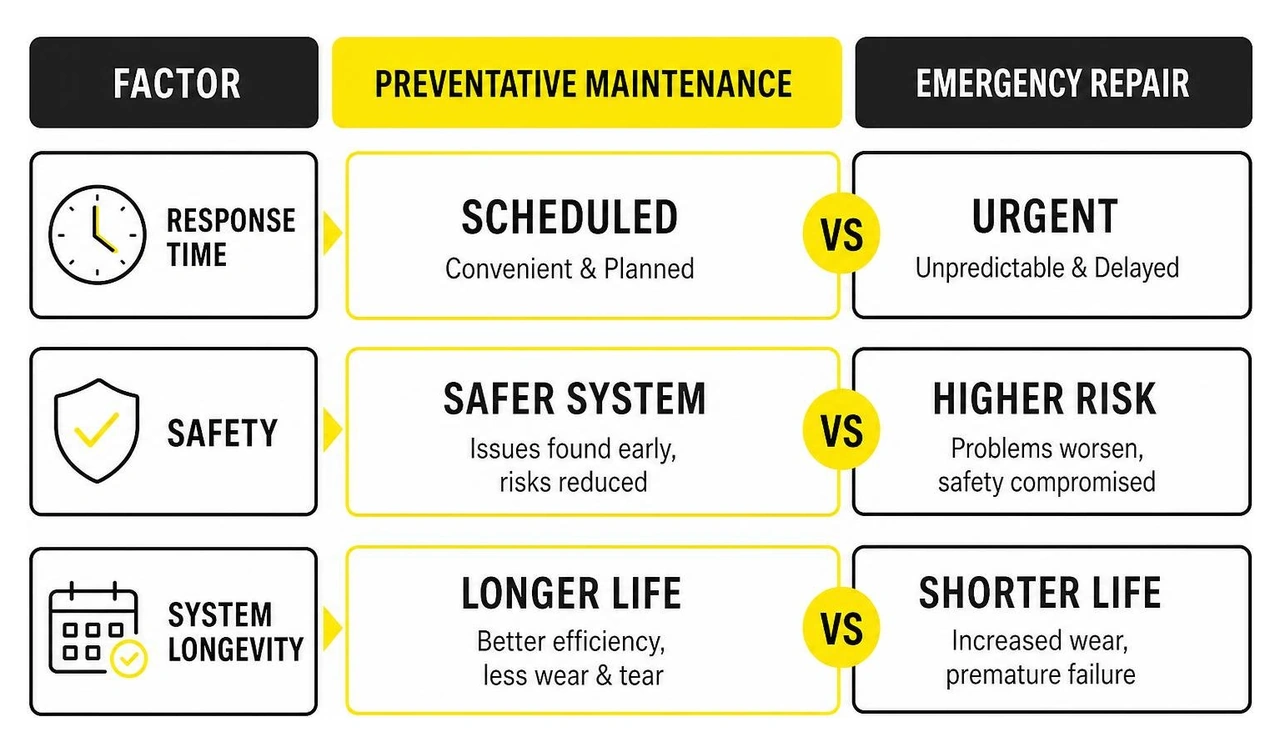
Here is a quick comparison diagram showing the benefits of professional annual maintenance versus waiting for an emergency breakdown:
Essential Maintenance Schedules for Heating Systems
Nearly half of all heating system failures stem from a lack of regular routine care. Gas furnaces typically last 15 to 20 years, while electric furnaces can operate for 20 to 30 years when properly maintained.
By establishing a scheduled inspection routine, you gain significant long-term advantages:
- 95% Reduction in Unexpected Breakdowns: Routine checks catch worn belts, dirty flame sensors, and failing capacitors before they leave you without heat during extreme weather.
- Extended Equipment Lifespan: Annual servicing can add 5 to 10 years of reliable operation to your furnace's operating life.
- Optimized Energy Efficiency: Clean burners, balanced fan blades, and clear filters allow the system to heat your home using less energy.
- Safe Operating Conditions: Pre-season testing ensures fuel gas valves, pressure switches, and exhaust vents operate cleanly without dangerous gas or CO leaks.
Setting up regular furnace maintenance cushing ok before cold weather sets in protects your home and keeps your system performing reliably year after year.
If you own residential properties in other areas or want to learn about regional cooling and heating services, you can check out details on 24/7 Covington AC Repair, Air Conditioning & HVAC Service , read about AC Repair - Marietta , or learn how warm-climate equipment is maintained via Local Furnace Repair in Orlando, Florida .
Frequently Asked Questions About Residential Furnace Repair
How Often Should a Furnace Be Serviced in Cushing?
A residential furnace should be professionally serviced at least once per year. The ideal time for a thorough tune-up is early autumn, before you turn on the heat for the first time. During an annual service visit, technicians clean the burner assembly, inspect the heat exchanger, test safety controls, check the ignition system, and verify proper airflow.
Investing in a yearly furnace tune up helps catch hidden mechanical wear early, reducing the risk of sudden winter outages while maximizing fuel efficiency.
What Are the Signs of a Cracked Heat Exchanger?
A cracked heat exchanger is a severe safety hazard because it allows carbon monoxide and toxic combustion gases to enter your home's air supply. Common warning signs include:
- Soot buildup on internal burner components or around air registers.
- A yellow, flickering burner flame instead of a steady blue flame.
- Unexplained physical symptoms among family members, such as headaches, nausea, dizziness, or flu-like feelings when the furnace is running.
- Strong, unusual chemical or formaldehyde-like odors originating from the cabinet.
- Frequent triggering of household carbon monoxide alarms.
If you suspect a heat exchanger fracture, turn off your heating system immediately, open windows for fresh air, and call for professional service. Read our helpful guide on furnace replacement vs repair to understand your options when structural components are compromised.
Is Furnace Replacement Better Than Repair?
Deciding whether to repair or replace your heating system depends on several factors:
- Age of the Furnace: If your gas furnace is over 15 to 20 years old (or electric system over 20 years old) and experiencing repeated component failures, replacement is usually the smarter long-term option.
- Frequency of Breakdown: If you find yourself calling for emergency repairs multiple times each season, replacing the system provides reliable heating and eliminates ongoing repair headaches.
- Efficiency and Operating Performance: Older heating units operate at much lower efficiency levels compared to modern high-efficiency systems. Upgrading reduces fuel consumption and delivers far more consistent heating across all rooms.
If your existing system is approaching the end of its functional life, exploring options for furnace replacement cushing ok can deliver reliable, energy-efficient comfort for decades to come.
Conclusion
At Sitton Mechanical, we bring over 10 years of hands-on experience to every home we serve across Cushing, Stillwater, Perkins, Morrison, Glencoe, Perry, Mulhall, Orlando, Ripley, and Sumner. Our background-screened, certified technicians deliver upfront pricing, clear communication, and guaranteed workmanship so you never have to worry about winter weather taking you by surprise.
Whether your system needs minor troubleshooting, emergency repairs, or an annual tune-up, our team is here to keep your home warm, safe, and efficient all winter long. Contact us today for reliable residential furnace repair in Cushing and enjoy true peace of mind every time temperatures drop.