When Your Heater Stops Working in Cushing, OK
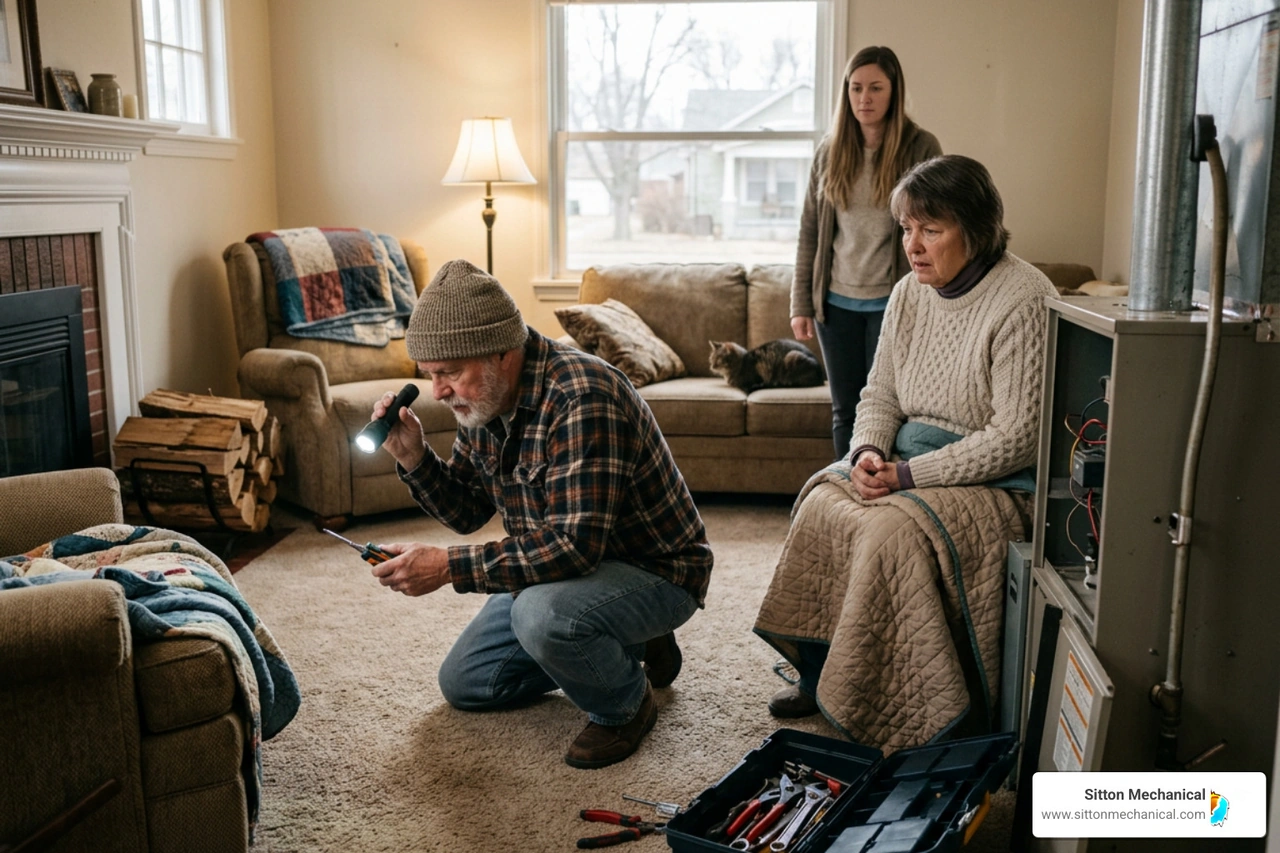
A broken heater in Cushing can go from an inconvenience to a serious problem fast — especially when Oklahoma temperatures drop below freezing overnight.
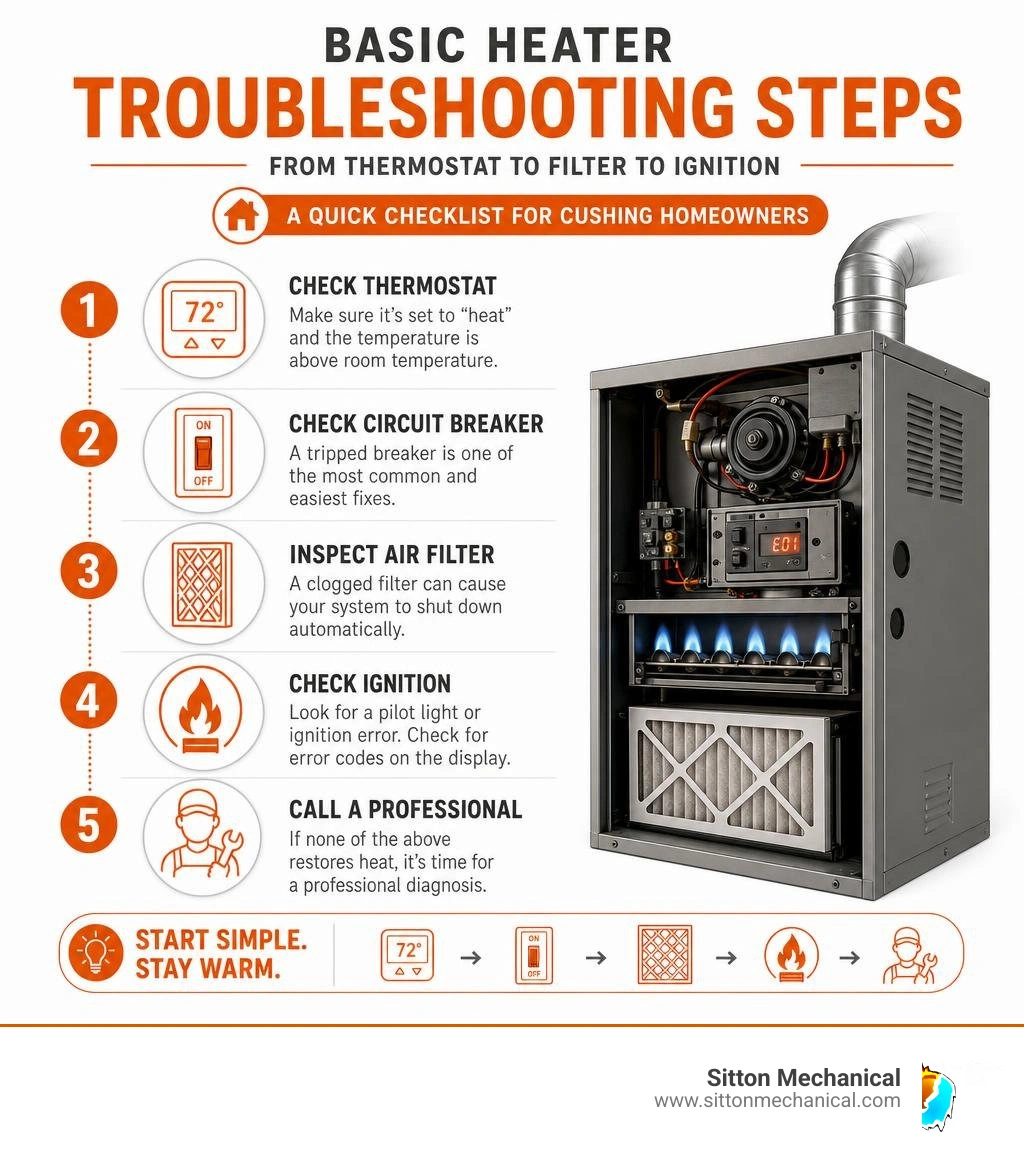
If your heater just stopped working, start here:
- Check your thermostat — make sure it's set to "heat" and the temperature is above room temperature
- Check your circuit breaker — a tripped breaker is one of the most common and easiest fixes
- Inspect your air filter — a clogged filter can cause your system to shut down automatically
- Look for a pilot light or ignition error — gas furnaces may show an error code on the display panel
- Call a certified HVAC technician — if none of the above restores heat, it's time for a professional diagnosis
Cushing winters are no joke. With around 4,480 households in the area depending on reliable heating, a system failure in the middle of January isn't something you want to troubleshoot slowly. The good news is that most heater breakdowns come down to a handful of common causes — and many can be diagnosed quickly with the right guidance.
This guide walks you through exactly what to look for, what to do first, and when to call in the pros.
Glossary for broken heater cushing:
Troubleshooting a Broken Heater in Cushing: Key Warning Signs
Before a heating system completely gives up the ghost, it usually drops a few hints. Recognizing these warning signs early can save you from an emergency situation on a freezing night. If you notice your system behaving strangely, scheduling heating repair services early can prevent a minor issue from turning into a total system failure.
Strange Noises and Weak Airflow
Your heating system should run with a relatively quiet, predictable hum. If it starts sounding like a washing machine full of wrenches, something is wrong.
Common noises that signal a broken heater in Cushing include:
- Screeching or Squealing: This often points to a failing blower motor belt or bearings that have lost their lubrication.
- Banging or Clanging: This typically indicates a loose component inside the blower assembly or a delayed ignition issue in gas furnaces.
- Rattling: Loose panels, failing motor mounts, or ductwork issues can cause persistent rattling.
Weak airflow is another major warning sign. If your vents are barely whispering warm air into your rooms, your blower motor might be struggling, or you could have massive ductwork leaks. Additionally, a heavily clogged air filter restricts airflow so severely that the system will overheat and shut down. For a deeper dive into these mechanical issues, check out our comprehensive furnace repair guide.
Step-by-Step DIY Diagnostics
If you find yourself shivering next to a cold vent, do not panic. Before you call for backup, run through this simple step-by-step diagnostic sequence to see if you can safely restore power yourself.

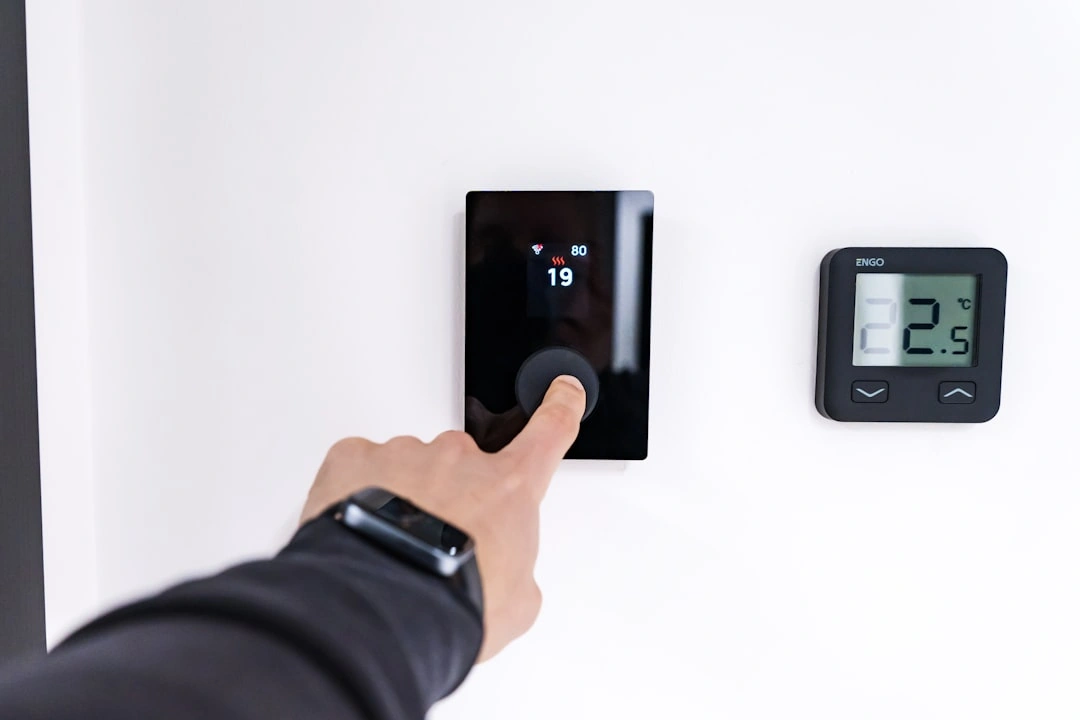
- Verify Thermostat Settings: It sounds silly, but double-check that your thermostat is set to "Heat" and "Auto" (rather than "On," which just blows room-temperature air constantly). Ensure the target temperature is set at least five degrees above the current room temperature. If the screen is blank, replace the batteries immediately.
- Inspect the Electrical Panel: Locate your home's main breaker box. Look for the circuit breaker labeled "Furnace," "Heating," or "HVAC." If it has tripped to the middle position, flip it completely to "Off" and then back to "On."
- Check the Power Switch: Most central heating units have a power switch nearby that looks exactly like a standard light switch. It is incredibly easy to bump this switch off accidentally while retrieving Christmas decorations or cleaning nearby. Ensure it is flipped up to the "On" position.
- Examine the Air Filter: Pull out your air filter. If you cannot see light through it, replace it immediately. Modern systems have high-limit safety switches that shut down the unit if restricted airflow causes internal temperatures to spike.
Ignition and Pilot Light Issues
If your system has power and the thermostat is calling for heat, but only cold air is coming out, you likely have an ignition problem.
For older gas furnaces with a standing pilot light, check if the flame has gone out. A healthy pilot light flame should be a crisp, steady blue. If the flame is yellow or orange, it is not burning efficiently and may indicate a dirty burner or a lack of oxygen.
On modern systems with electronic ignition, a dirty flame sensor is one of the most common culprits. The flame sensor is a small, metal rod that detects whether a flame is present when the gas valve opens. If it is coated in carbon buildup or dust, it cannot detect the flame and will shut down the ignition cycle as a safety precaution. If you suspect a faulty thermocouple, bad gas valve, or dirty flame sensor, these components require professional handling to ensure gas safety.
Repair vs. Replacement: Making the Right Choice
When your heating system fails, you face a major decision: do you keep patching it up, or is it time to invest in a completely new unit? Making the right choice requires balancing long-term energy efficiency and reliability against the frequency of repairs.
When to Repair Your System
Repairing your current unit is usually the most logical choice if:
- The system is young: If your furnace or heat pump is under 10 years old, it likely has plenty of useful life left.
- The issue is minor: Replacing a capacitor, a blower belt, or a flame sensor is a quick fix that doesn't warrant replacing the entire system.
- The performance has been consistent: If your heater has kept your home perfectly comfortable up until this sudden hiccup, a simple repair should get you back on track.
For more guidance on diagnosing and resolving specific system issues, consult our heater repair complete guide.
When to Invest in a New Furnace
Sometimes, continuing to repair an old system is simply throwing good money after bad. You should seriously consider a replacement if:
- The system is over 15 years old: Most traditional furnaces last between 15 and 20 years. If your unit is approaching this milestone, its components are naturally reaching the end of their operational lives.
- You experience frequent breakdowns: If you find yourself scheduling repairs multiple times a season, those frequent breakdowns can become a major hassle.
- Your utility bills are skyrocketing: Older systems lose efficiency over time. Upgrading to a modern, high-efficiency system can dramatically lower your monthly energy consumption.
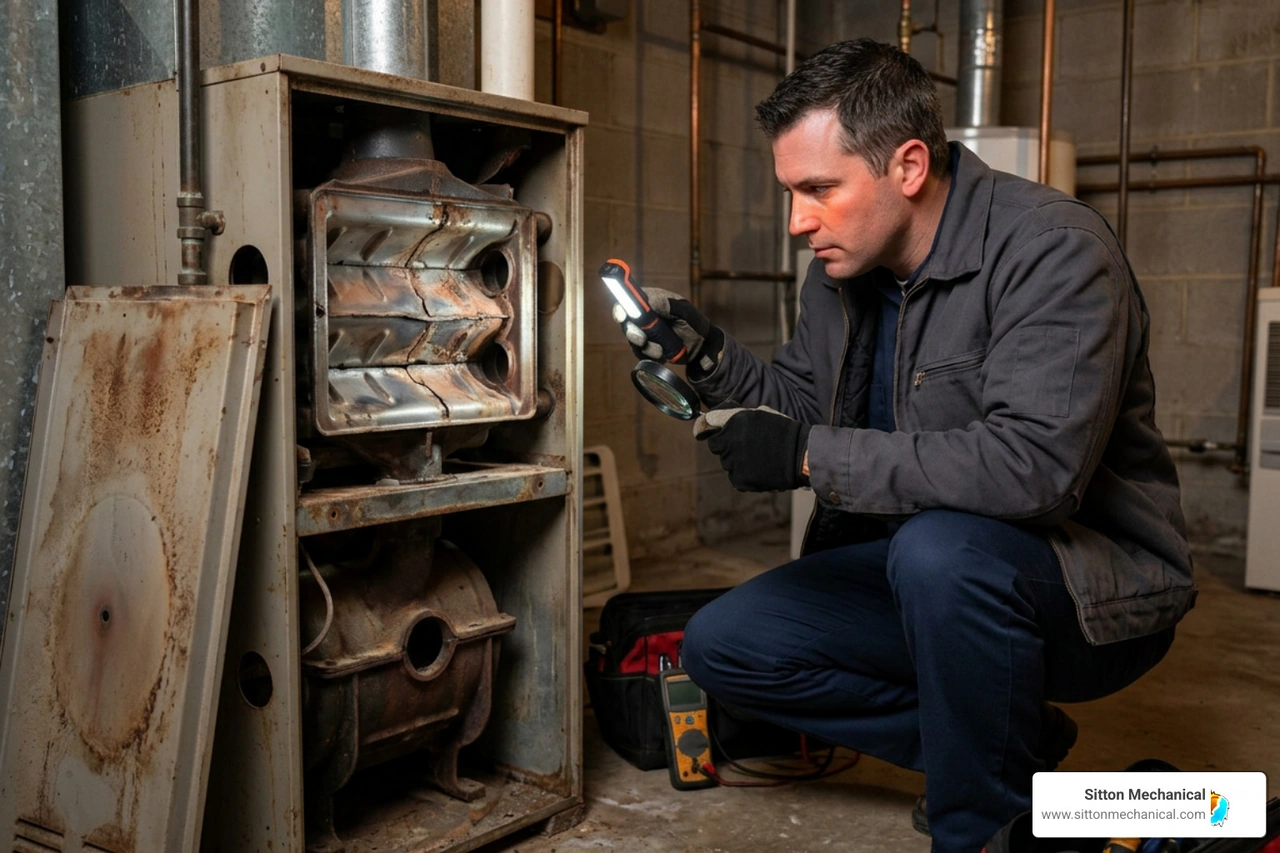
- The heat exchanger is cracked: A cracked heat exchanger is a severe safety hazard that can leak carbon monoxide into your home. In almost all cases, a cracked heat exchanger warrants an immediate system replacement.
If you decide it is time to upgrade, our furnace installation guide can help you navigate the process of selecting the perfect unit for your home's unique layout.
Preventing Future Heating Emergencies
The best way to handle a broken heater in Cushing is to prevent it from breaking down in the first place. Different types of heating systems have unique maintenance needs, advantages, and lifespans.
| Heating System Type | Average Lifespan | Primary Fuel Source | Key Maintenance Needs |
|---|---|---|---|
| Gas Furnace | 15–20 Years | Natural Gas or Propane | Flame sensor cleaning, heat exchanger inspection, burner adjustments |
| Electric Furnace | 15–20 Years | Electricity | Heating element testing, electrical connection tightening |
| Heat Pump | 10–15 Years | Electricity | Reversing valve check, refrigerant level monitoring, outdoor coil cleaning |
The Importance of Annual Maintenance
Just like changing the oil in your car, your heating system requires regular professional tune-ups to operate safely and efficiently. During a professional maintenance visit, a technician will clean internal components, test safety controls, monitor carbon monoxide levels, and optimize airflow.
Regular maintenance is especially critical for gas systems, where a cracked heat exchanger or a blocked flue pipe can lead to deadly carbon monoxide leaks. Scheduling a professional furnace maintenance visit every autumn ensures your system is primed and safe before the first cold snap hits Oklahoma.
Simple Homeowner Maintenance Tasks
While professional tune-ups are essential, there are several simple tasks you can perform to keep your system happy:
- Keep Vents Clear: Ensure that furniture, drapes, and rugs are not blocking any supply or return air registers. Restricting airflow puts unnecessary strain on your system.
- Monitor System Behavior: Pay attention to how your system runs. If you notice it turning on and off rapidly (short-cycling) or struggling to reach your thermostat's set temperature, don't wait for a total breakdown to address it.
- Change Filters Regularly: Mark your calendar to check your air filter every 30 to 90 days.
By staying proactive with a professional furnace tune-up, you can maximize your system's lifespan and keep your utility bills manageable.
Frequently Asked Questions About Heating Systems
What should I do first with a broken heater in Cushing?
If your heater stops working, your very first step should be to check your thermostat's settings and batteries. Next, verify that your home's circuit breaker hasn't tripped and that the furnace's local power switch is turned on. If your system runs on gas, check to see if your pilot light is lit (for older models) or if the system is displaying an error code. If these basic checks do not resolve the issue, turn off the system at the thermostat and contact a professional to prevent further damage.
How can I prevent a broken heater in Cushing during extreme cold?
Preventing winter breakdowns starts in the fall. Schedule an annual pre-season heating tune-up to catch minor wear and tear before it escalates. Change your air filter regularly, especially during periods of heavy use. If you are expecting a severe winter storm, insulate any exposed water pipes near your HVAC unit, keep your home's interior doors open to promote even airflow, and avoid making drastic temperature adjustments on your thermostat, which can overwork the system. To keep your home systems running smoothly year-round, it also helps to stay on top of other essential local maintenance, such as booking reliable heating and cooling services.
How long do typical home heating systems last?
Most standard gas and electric furnaces last between 15 and 20 years, while air-source heat pumps typically last 10 to 15 years due to the fact that they run year-round for both heating and cooling. Other major appliances in your home have different lifespans; for example, you can compare a water heater lifespan vs heater lifespan, as traditional tank water heaters generally last about 8 to 12 years before requiring replacement. Consistent preventative maintenance is the single most important factor in helping all of these systems reach their maximum potential lifespans. If you live in surrounding areas, finding trusted HVAC services in Glencoe or nearby communities is the best way to protect your investment.
Conclusion
A broken heater in Cushing doesn't have to ruin your winter. By understanding the warning signs of a failing system, running through basic DIY troubleshooting, and staying on top of preventative maintenance, you can keep your home warm and cozy no matter how low the Oklahoma temperatures drop.
When DIY steps aren't enough, Sitton Mechanical, LLC is here to help. With over 10 years of experience serving Stillwater, Perkins, Morrison, Glencoe, Perry, Cushing, Mulhall, Orlando, Ripley, and Sumner, our team of screened and certified technicians is dedicated to providing reliable, on-time heating repairs. We back our work with guaranteed service and professional expertise to ensure your peace of mind.
Don't spend the night shivering. Contact our Cushing HVAC team today to schedule your professional heating repair or maintenance service!