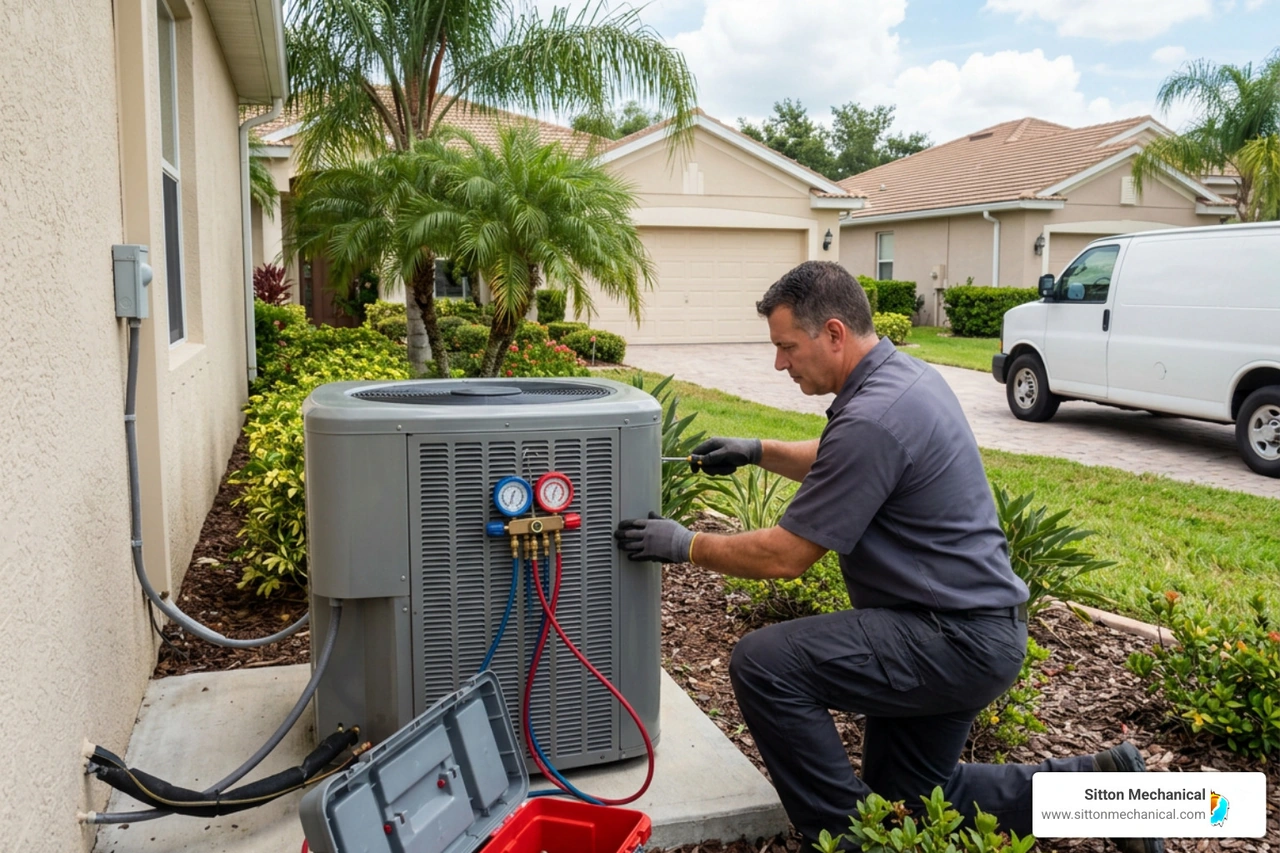
Why Heat Pump Repair in Orlando Demands Specialized Attention
If you're dealing with heat pump repair in Orlando, here's a quick look at the most important things to know:
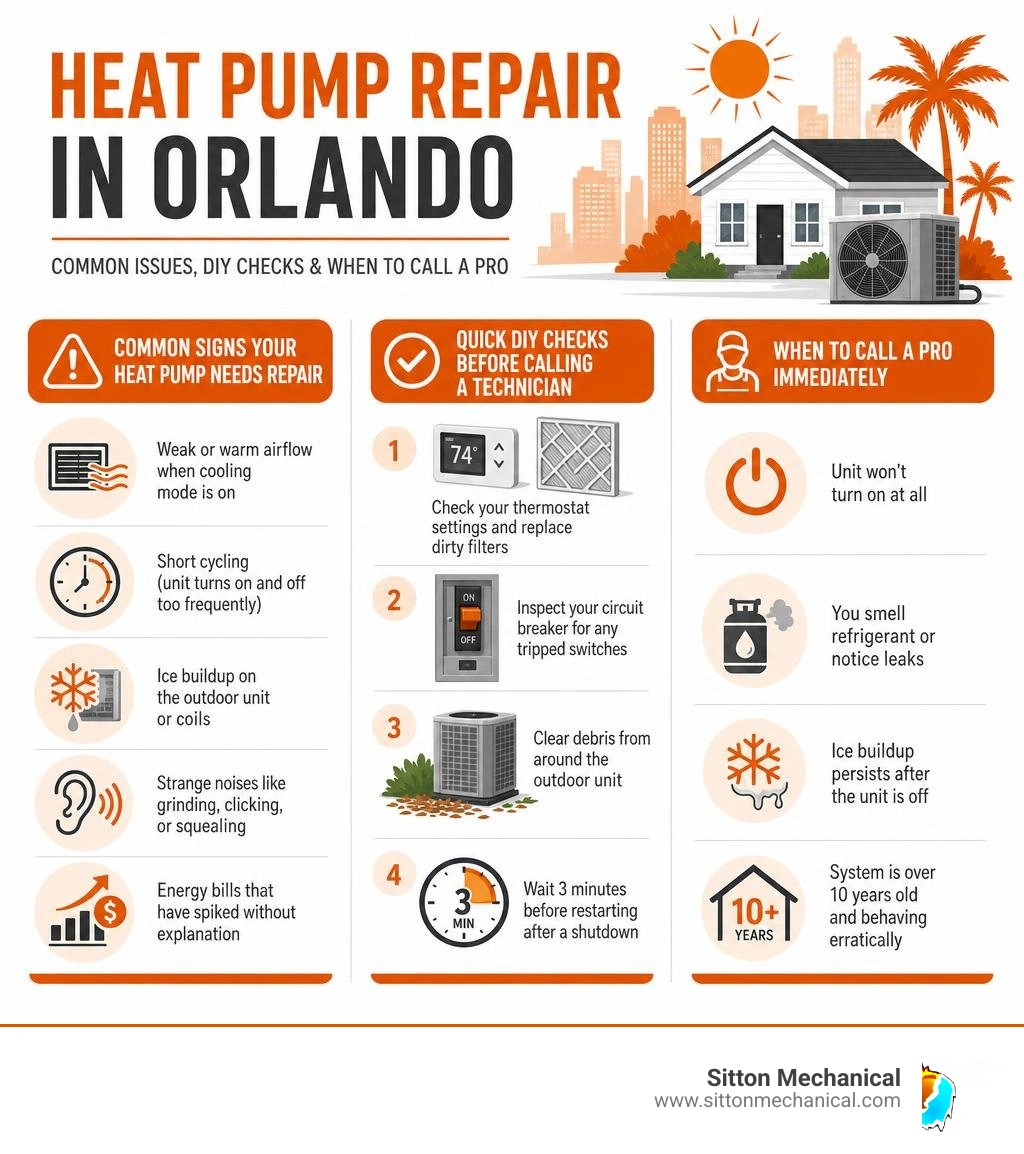
Most common signs your heat pump needs repair:
- Weak or warm airflow when cooling mode is on
- Short cycling (unit turns on and off too frequently)
- Ice buildup on the outdoor unit or coils
- Strange noises like grinding, clicking, or squealing
- Energy bills that have spiked without explanation
Quick DIY checks before calling a technician:
- Check your thermostat settings and replace dirty filters
- Inspect your circuit breaker for any tripped switches
- Clear debris from around the outdoor unit
- Wait 3 minutes before restarting after a shutdown
When to call a pro immediately:
- Unit won't turn on at all
- You smell refrigerant or notice leaks
- Ice buildup persists after the unit is off
- System is over 10 years old and behaving erratically
Orlando's heat and humidity put heat pumps to work year-round — not just in winter like in most of the country. Because of that, the wear these systems experience here is unlike almost anywhere else in the U.S.
In fact, roughly 85–90% of central Florida homes rely on a heat pump as their primary heating and cooling system. That makes keeping your system in good shape a practical necessity, not an optional upgrade.
The challenge? Orlando's climate creates specific failure patterns — from humidity-driven coil corrosion to storm-related electrical surges — that require a technician who understands the local environment, not just general HVAC principles.
That's what this guide is built for. Whether your system is short cycling, blowing warm air, or just acting strange, Sitton Mechanical is here to walk you through what's likely happening and what to do about it.
Navigating Heat Pump Repair Orlando: Common Climate Challenges
When we talk about Orlando, Oklahoma, we are talking about a region that experiences the full force of the Great Plains' dramatic seasonal shifts. Unlike milder regions, our slice of Logan County sees scorching, humid summers followed by freezing winter winds. This extreme thermal stress means your heat pump never gets a true vacation. It operates in cooling mode for months, only to pivot directly into heating mode when the cold fronts roll in.
Over time, this constant cycling takes a heavy toll. One of the most frequent issues we encounter during a Heat Pump Repair Orlando, FL visit is refrigerant degradation or leaks. Because heat pumps rely on transferring heat rather than generating it, maintaining the exact refrigerant charge is critical. When a leak occurs, your system has to work twice as hard to keep your home comfortable, leading to soaring utility bills and eventual compressor failure.
Furthermore, our local weather brings severe thunderstorms, high winds, and occasional lightning strikes. These atmospheric events can send powerful electrical surges straight to your outdoor unit. Without adequate surge protection, these voltage spikes can fry control boards, melt contactors, and destroy capacitors. If you find yourself searching for reliable Heat Pump Repair Orlando services after a heavy summer storm, electrical damage is often the prime suspect.
Tackling Thermostats, Ductwork, and Electrical Failures
A heat pump is a complex machine where electrical, mechanical, and airflow systems must work in perfect harmony. When one of these components falters, the entire system can grind to a halt. As part of our comprehensive HVAC Repair Orlando services, we frequently diagnose issues that originate not in the compressor itself, but in the supporting electrical and distribution networks.
Electrical failures are among the most common reasons a heat pump stops working without warning. Inside your outdoor unit, the dual run capacitor acts like a temporary battery, providing the electrical boost needed to start the compressor and fan motor. Due to high summer temperatures and constant operation, capacitors can bulge, leak, and fail. When this happens, you might hear a faint humming sound from your outdoor unit, but the fan and compressor won't spin. Recognizing these electrical warning signs early can save you from a much larger, more complicated repair down the line.
Thermostat Miscalibrations and Communication Errors
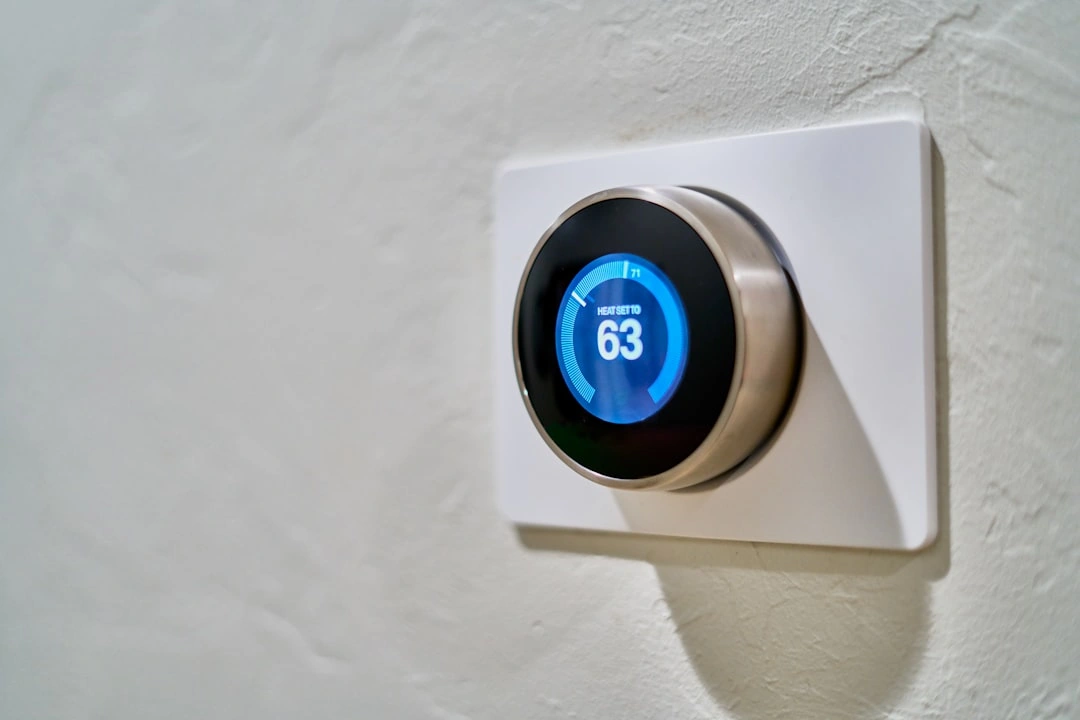
Your thermostat is the brain of your heating and cooling system. If it isn't communicating correctly with your heat pump, you will experience comfort issues. Thermostat miscalibrations can lead to "phantom readings," where the thermostat believes the room is much warmer or cooler than it actually is.
We often find that older manual thermostats or improperly configured digital models struggle to manage the reversing valve of a heat pump. Unlike traditional air conditioners, a heat pump must know exactly when to energize the reversing valve to switch between heating and cooling modes. If your thermostat has a sensor malfunction or wiring issue, it might call for cooling but receive hot air instead. Modernizing your home with smart home integration can prevent these communication errors, ensuring your thermostat sends clear, precise commands to your HVAC system.
Ductwork Issues and Airflow Restrictions
You can have the most advanced heat pump on the market, but if your ductwork is compromised, you won't feel the benefits. Undersized ducts are a common issue in older homes, restricting the volume of air your system can move. This restriction increases static pressure within the system, forcing the blower motor to work harder, run hotter, and fail prematurely.
Air leaks in your ductwork also allow conditioned air to escape into your attic or crawlspace, wasting energy and reducing indoor comfort. Additionally, something as simple as a dirty air filter can completely choke your system's airflow. When airflow is restricted, the indoor evaporator coil can freeze over, blocking air entirely and potentially sending liquid refrigerant back to the compressor, which can cause catastrophic damage. Regular check-ups and professional Air Conditioning Services Orlando can keep your ductwork clean, sealed, and properly balanced.
When to Repair vs. Replace Your Heating System
Deciding whether to patch up your existing heat pump or invest in a brand-new system is a major decision for any homeowner. To help you evaluate your options, we have put together a quick comparison table outlining the key indicators for both paths.
| Repair Indicators | Replacement Indicators |
|---|---|
| System is under 10 years old | System is over 12–15 years old |
| Minor electrical issue (e.g., failed capacitor) | Compressor or heat exchanger failure |
| First major malfunction in several years | Frequent breakdowns requiring constant service calls |
| Energy bills remain stable and reasonable | Energy bills are rising due to declining efficiency |
| System still holds a valid manufacturer warranty | System uses obsolete refrigerant |
If you are facing a major repair on an aging unit, choosing a professional Heat Pump Installation Orlando service is often the most financially sound decision in the long run.
Recognizing the Signs You Need Heat Pump Repair Orlando
Your heat pump will usually tell you when something is wrong before it shuts down completely. Homeowners should look out for several key warning signs:
- Weak Airflow: If air is barely trickling out of your registers, you could have a failing blower motor or a severe duct leak.
- Short Cycling: When a unit turns on and off every few minutes, it is often overheating due to restricted airflow or experiencing a failing control board.
- Frozen Evaporator Coils: Ice on your indoor or outdoor coils is a clear sign of low refrigerant or restricted airflow.
- Unusual Noises: Squealing, grinding, or loud metal-on-metal clicking sounds indicate mechanical wear that needs immediate attention.
- Blowing Warm Air in Cool Mode: If your home won't cool down, your reversing valve may be stuck, or your refrigerant levels may be low.
Ignoring these early warning signs can turn a simple fix into a major system breakdown. Scheduling timely Heating Services Orlando is the best way to protect your investment.
Evaluating the Lifespan and Efficiency of Older Units
On average, a well-maintained heat pump in our climate has a lifespan of 10 to 15 years. Because these units run during both the summer and winter months, they accumulate wear and tear much faster than a standalone furnace or air conditioner.
As your system ages, its efficiency naturally declines. Older units typically have lower SEER (Seasonal Energy Efficiency Ratio) and HSPF (Heating Seasonal Performance Factor) ratings compared to modern systems. Upgrading to a newer model can reduce your monthly energy consumption by 30% to 40%. When you consult with our team about new Heat Pumps Orlando, we will perform a full load calculation to ensure your new system is perfectly sized for maximum year-round efficiency.
What to Expect During a Professional Service Visit
When you book a professional service call with us, we want you to feel confident and informed from the moment our technician arrives at your door. We believe in complete transparency, which is why our technicians take the time to explain their findings and walk you through your options before performing any work.
During a visit, our technicians follow strict safety protocols. We start by shutting off the electrical power to the system to ensure a safe workspace. From there, we perform a comprehensive inspection of both the indoor air handler and the outdoor condenser unit. Our goal is to find the root cause of the issue, rather than simply treating the symptoms. Regular Heat Pump Maintenance in Orlando is the absolute best way to catch these issues early and keep your manufacturer's warranty fully intact.
Troubleshooting Steps Before Calling for Heat Pump Repair Orlando
Before you pick up the phone to schedule a professional visit, we recommend performing a few basic troubleshooting checks. These steps can sometimes resolve minor issues and save you a service call:
- Check the Thermostat: Ensure your thermostat is set to the correct mode (Heat or Cool) and that the temperature setting is at least 3 to 5 degrees below or above the current room temperature.
- Inspect the Circuit Breakers: Go to your home's main electrical panel and verify that the breakers labeled for your indoor and outdoor HVAC units are in the "On" position.
- Replace the Air Filter: A heavily clogged filter can cause the system to shut down due to safety switches. Replace it if it is dirty.
- Clear Outdoor Debris: Make sure there are no leaves, tall grass, or debris blocking the airflow around your outdoor condenser unit.
- Verify Water Flow: If you have a water-source heat pump, ensure all water valves are open and the pump is running.
If you have completed these steps and your system still refuses to run properly, it is time to contact us for professional AC Repair Orlando support.
The Step-by-Step Diagnostic and Repair Process
When our technician diagnoses your heat pump, they follow a highly organized, step-by-step process to ensure nothing is missed:
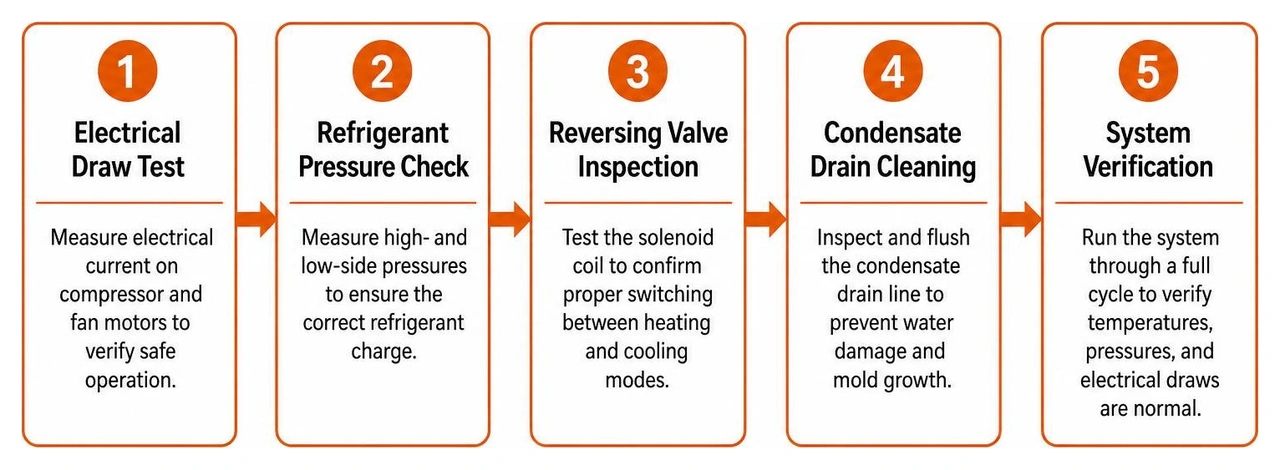
- Electrical Draw Test: We measure the electrical current running through your compressor and fan motors to verify they are operating within safe manufacturer specifications.
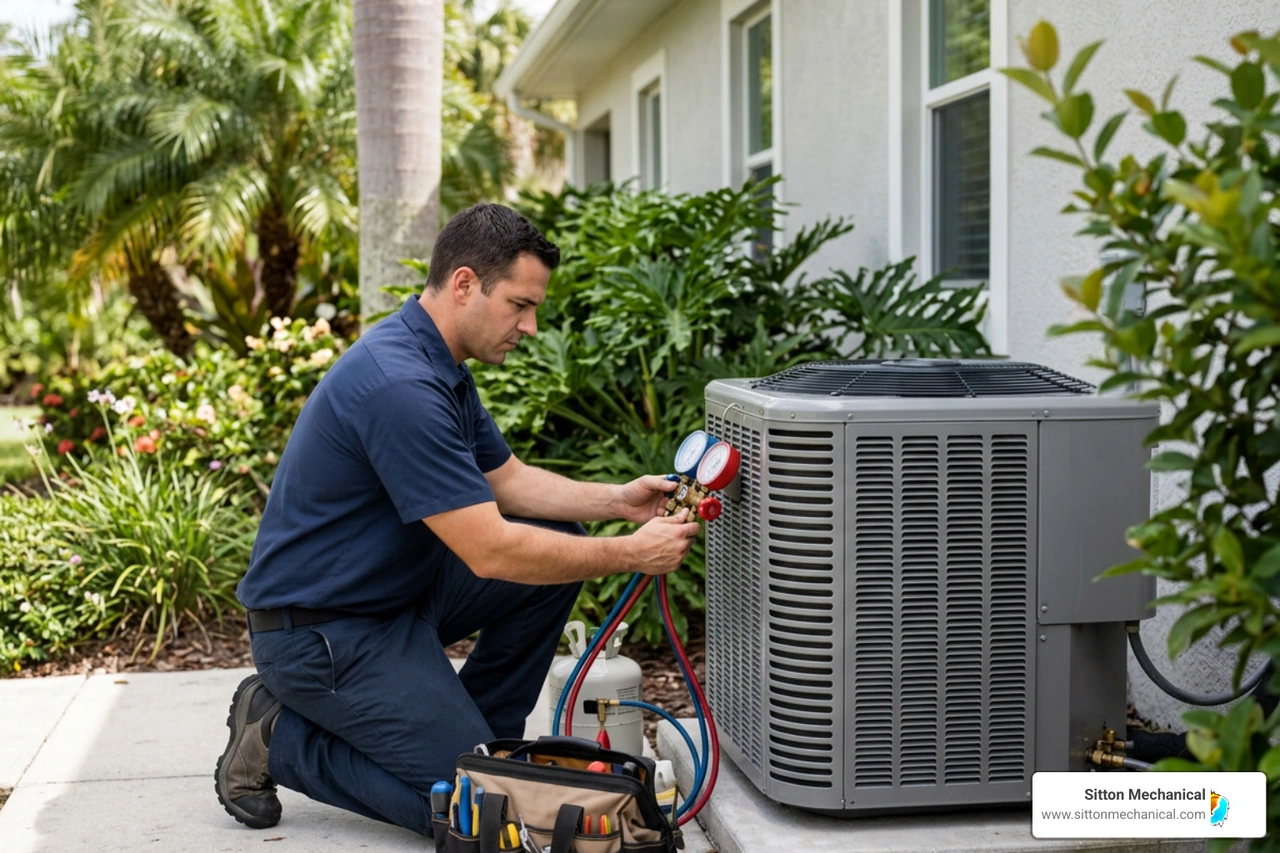
- Refrigerant Pressure Check: Using specialized gauges, we measure the high- and low-side pressures to ensure your system has the correct refrigerant charge.
- Reversing Valve Inspection: We test the solenoid coil on your reversing valve to confirm the system can transition between heating and cooling modes.
- Condensate Drain Cleaning: We inspect and flush the condensate drain line to prevent water damage and eliminate mold growth.
- System Verification: Once the repair is complete, we run the system through a full cycle to verify that temperatures, pressures, and electrical draws have returned to normal.
Frequently Asked Questions About Orlando Heating Systems
How often should a heat pump be serviced in Florida?
Even though we are located in Oklahoma, the high-demand usage patterns of heat pumps mean they require regular care. We recommend scheduling professional maintenance twice a year — once in the spring before the summer heat hits, and once in the autumn before the winter cold sets in. Regular Heat Pump Maintenance Orlando keeps your system running efficiently and helps prevent unexpected breakdowns.
Why is my heat pump running but not heating the house?
This is often caused by a malfunctioning reversing valve, which prevents the system from switching from cooling mode to heating mode. Other common culprits include low refrigerant levels, dirty coils that restrict heat transfer, or a misconfigured thermostat that isn't sending the correct signal to the outdoor unit.
What is the average lifespan of a heat pump in this climate?
In our North-Central Oklahoma climate, a heat pump typically lasts between 10 and 15 years. The combination of intense summer heat, freezing winter temperatures, and seasonal dust storm activity subjects these systems to significant wear. Regular preventative maintenance is the single most effective way to extend your system's operational lifespan.
Conclusion
At Sitton Mechanical, we are committed to keeping your home comfortable through every Oklahoma season. Serving Stillwater, Orlando, Perkins, and the surrounding areas, our team of experienced, certified technicians is ready to handle all your heating, cooling, and refrigeration needs. We pride ourselves on upfront transparency, guaranteed workmanship, and dependable, on-time service.
If your heat pump is struggling to keep up with the weather, don't wait for a complete system breakdown. Contact us today to schedule your professional HVAC Services Orlando visit and experience the peace of mind that comes with expert care!