When Your Grocery Store's Refrigeration Fails, Everything Is at Stake
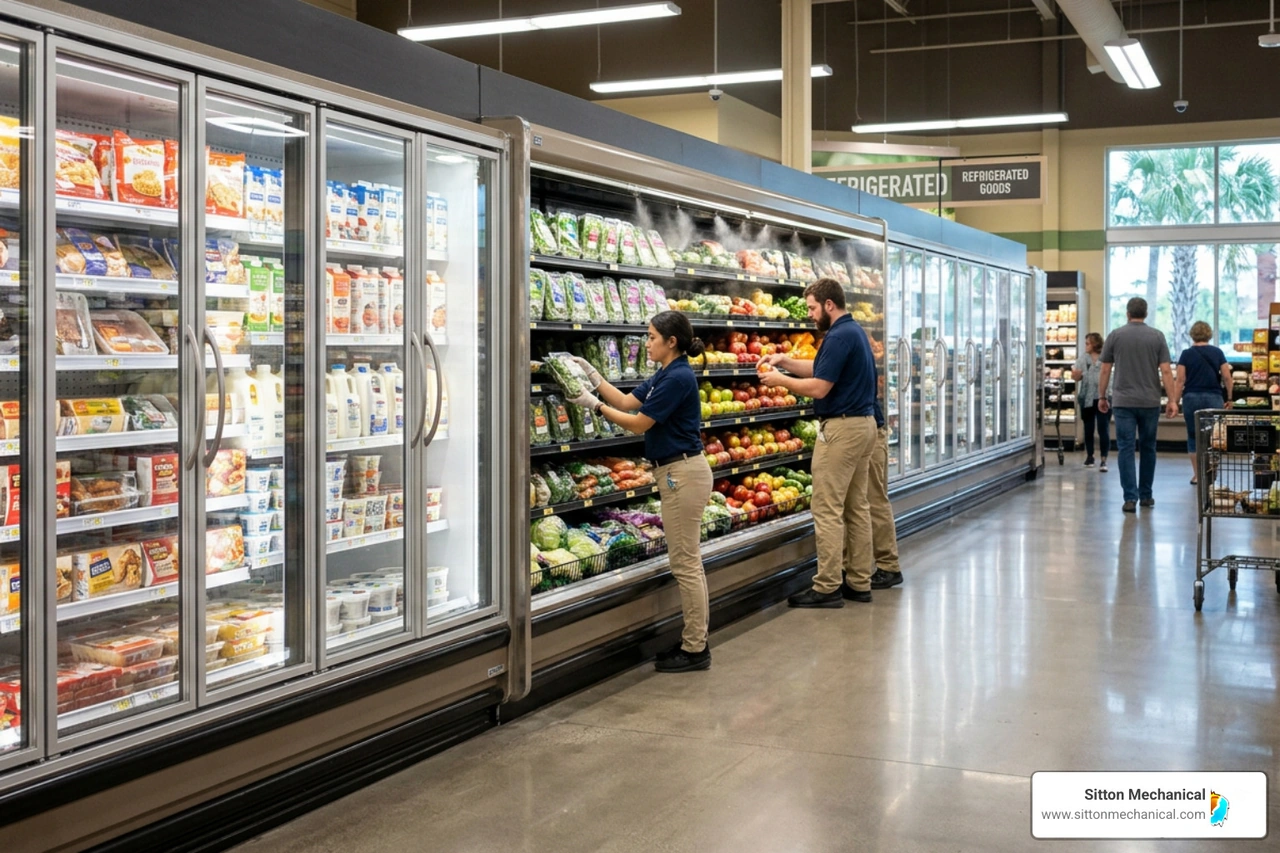
Grocery store refrigeration in Orlando is one of the most demanding and high-stakes systems a business can operate. In a city known for intense heat and year-round humidity, keeping perishables cold isn't just a convenience — it's a daily necessity that directly affects food safety, customer trust, and your bottom line.
Quick answer: What does grocery store refrigeration in Orlando involve?
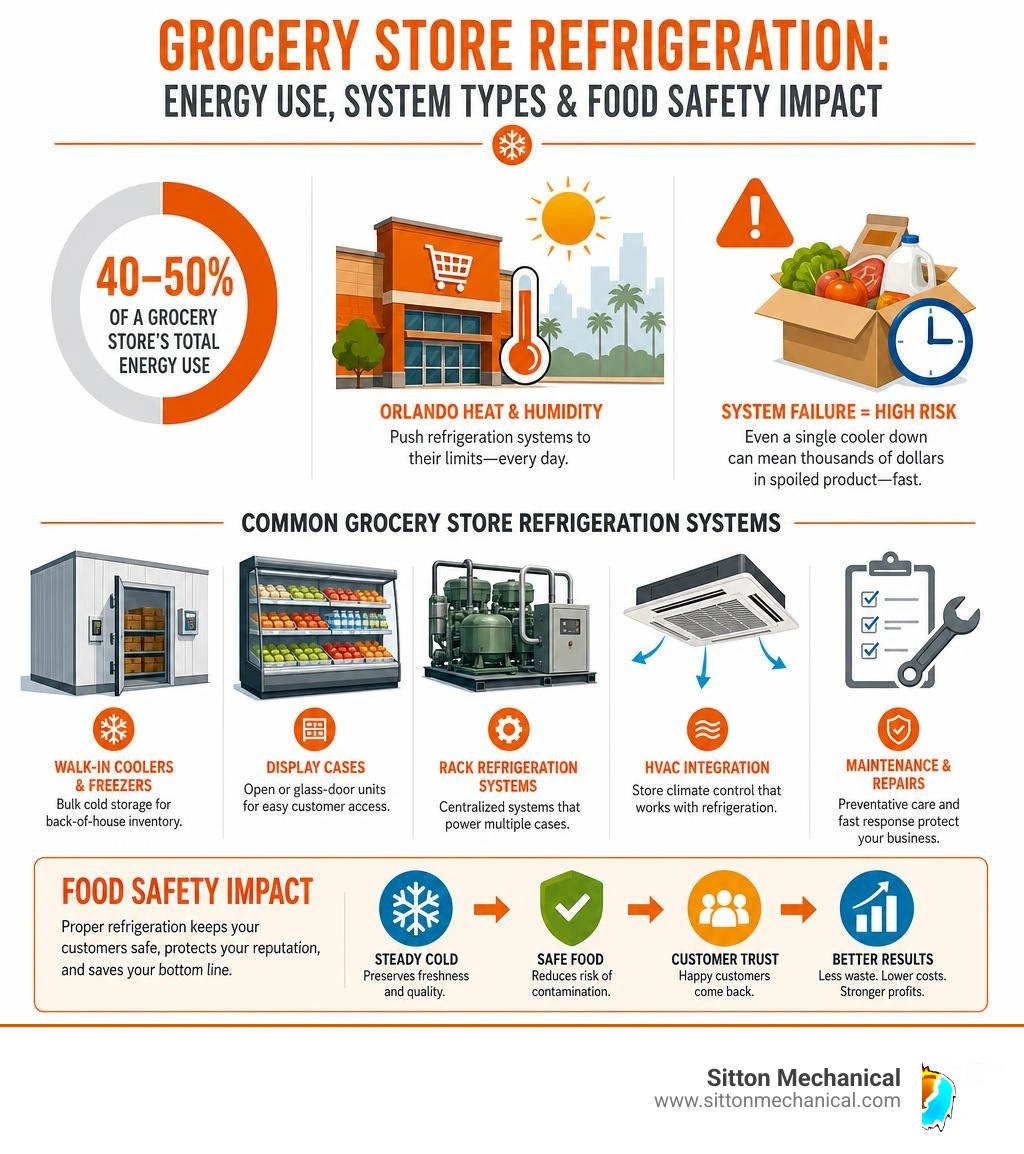
- Walk-in coolers and freezers — bulk cold storage for back-of-house inventory
- Display cases — open or glass-door units on the retail floor for customer access
- Rack refrigeration systems — centralized compressor systems that power multiple cases at once
- HVAC integration — store climate control that works alongside refrigeration units
- Preventative maintenance — regular inspections, coil cleaning, and leak detection
- Emergency repair services — fast response when systems fail unexpectedly
Commercial refrigeration can account for 40–50% of a grocery store's total energy use. And when something goes wrong — even a single walk-in cooler — thousands of dollars in product can spoil within hours.
Orlando's climate makes this even harder. High ambient temperatures, heavy humidity, and the occasional power disruption push refrigeration equipment to its limits every single day.
Whether you're managing a full supermarket or a smaller neighborhood grocery, having a reliable service partner for your refrigeration systems isn't optional — it's essential.
Glossary for grocery store refrigeration orlando:
Why Grocery Store Refrigeration Orlando Systems Are Critical for Food Safety
For grocery stores operating in Orlando, Oklahoma, maintaining food safety is a continuous battle against the elements. When summer temperatures soar across Noble and Payne counties, your commercial cooling equipment must work double-time. Proper temperature control is critical for preserving perishable goods such as dairy, meat, and produce to prevent costly spoilage.
Each department in a supermarket has distinct temperature requirements:
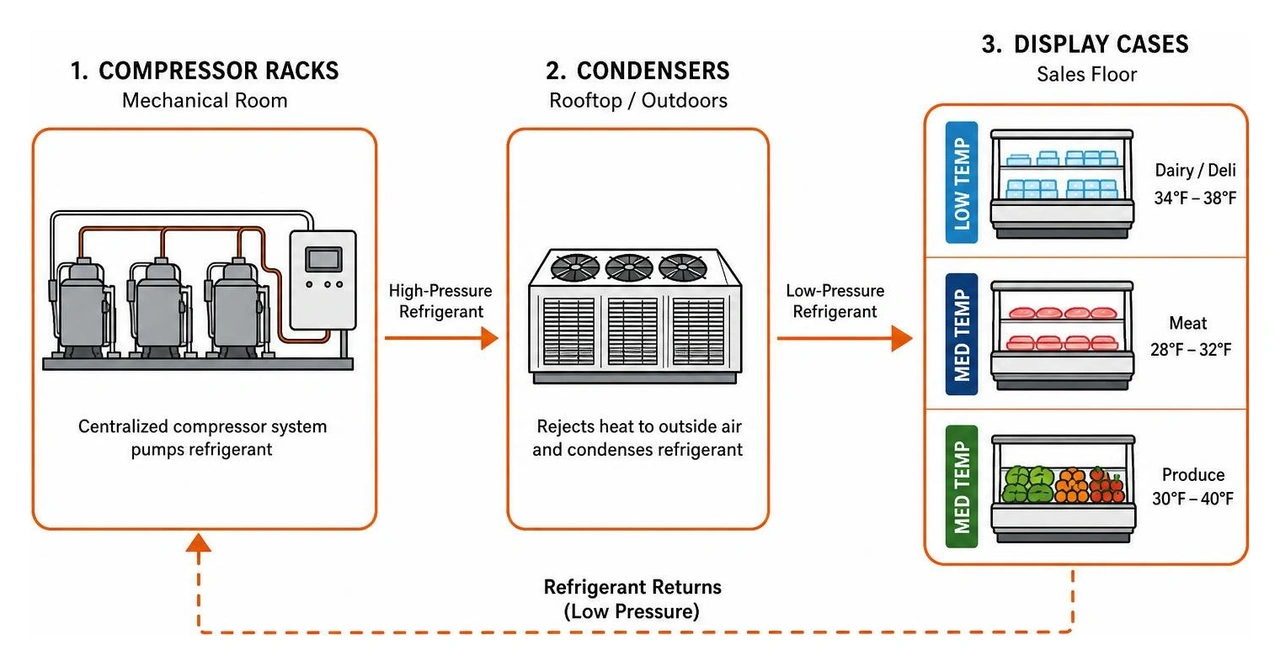
- Dairy Preservation: Dairy products must be held strictly between 34°F and 38°F. Even a minor temperature spike can accelerate bacterial growth, souring milk and ruining cheese inventory before its expiration date.
- Meat Storage: Fresh meats require temperatures hovering just above freezing—ideally 28°F to 32°F—to preserve texture, color, and safety.
- Produce Quality: Leafy greens and fresh fruits need precise humidity and temperature management to prevent wilting and mold.
When a refrigeration system experiences a hiccup, the clock starts ticking. A single malfunctioning walk-in cooler can put thousands of dollars worth of food at risk of spoilage within hours. This is why having reliable Commercial Fridges Orlando systems is the backbone of any successful local food retail business. Proper temperature control keeps your customers safe, protects your inventory, and ensures your business maintains its health department compliance.
Key Components of Supermarket Cooling Infrastructure
Supermarket cooling is vastly different from residential refrigeration. Instead of standalone appliances, a commercial grocery store relies on a complex, interconnected network of cooling systems.
To keep everything running smoothly, we focus on the installation, maintenance, and repair of three primary components: walk-in coolers, retail display cases, and centralized rack systems. For comprehensive care of this intricate setup, professional Commercial Refrigeration Services Orlando are required to balance refrigerant levels, manage oil return, and ensure electrical controls are operating correctly.
| System Type | Primary Location | Key Function | Temperature Range |
|---|---|---|---|
| Walk-In Coolers & Freezers | Back-of-house storage | Bulk inventory holding and preservation | -10°F to 38°F |
| Display Cases | Retail sales floor | Product presentation and customer access | 30°F to 40°F |
| Centralized Rack Systems | Mechanical room / Rooftop | Powering multiple evaporators from a single compressor bank | Variable (Low & Med Temp) |
Walk-In Coolers and Freezers
Walk-in units serve as your primary bulk storage. These heavily insulated rooms are engineered for maximum thermal resistance, keeping large quantities of inventory at stable temperatures before they are moved to the sales floor. Heavy insulation, tight door gaskets, and robust strip curtains are vital here to prevent warm air from infiltrating the space during heavy stocking periods.
Display Cases for Grocery Store Refrigeration Orlando Retail Floors
Display cases are where product quality and customer trust are on display. These units must balance visual appeal with thermal performance. Modern display cases utilize advanced glass doors and high-efficiency LED lighting to showcase products without transferring heat into the refrigerated space.
If you notice condensation forming on the glass or temperature fluctuations inside the case, it is a clear sign that Your Commercial Fridge Needs Repair. Left unaddressed, failing display cases lead to warm beverages, soft ice cream, and unhappy customers.
Centralized Rack Refrigeration Systems
The heart of any large grocery store is the centralized rack refrigeration system. Instead of having a separate compressor for every single display case, a rack system groups multiple compressors together in a mechanical room.
These compressors share the cooling load, cycling on and off based on the real-time demands of the store's evaporators. This centralized setup allows for superior energy distribution, easier maintenance access, and integrated electronic controls that monitor the entire store's cooling network.
Orlando Climate Challenges: Managing Humidity, Heat, and Power Reliability
Operating grocery store refrigeration in Orlando, Oklahoma, presents unique environmental hurdles. Oklahoma weather can be brutal, with relentlessly hot summers, high humidity levels, and sudden, severe storms.
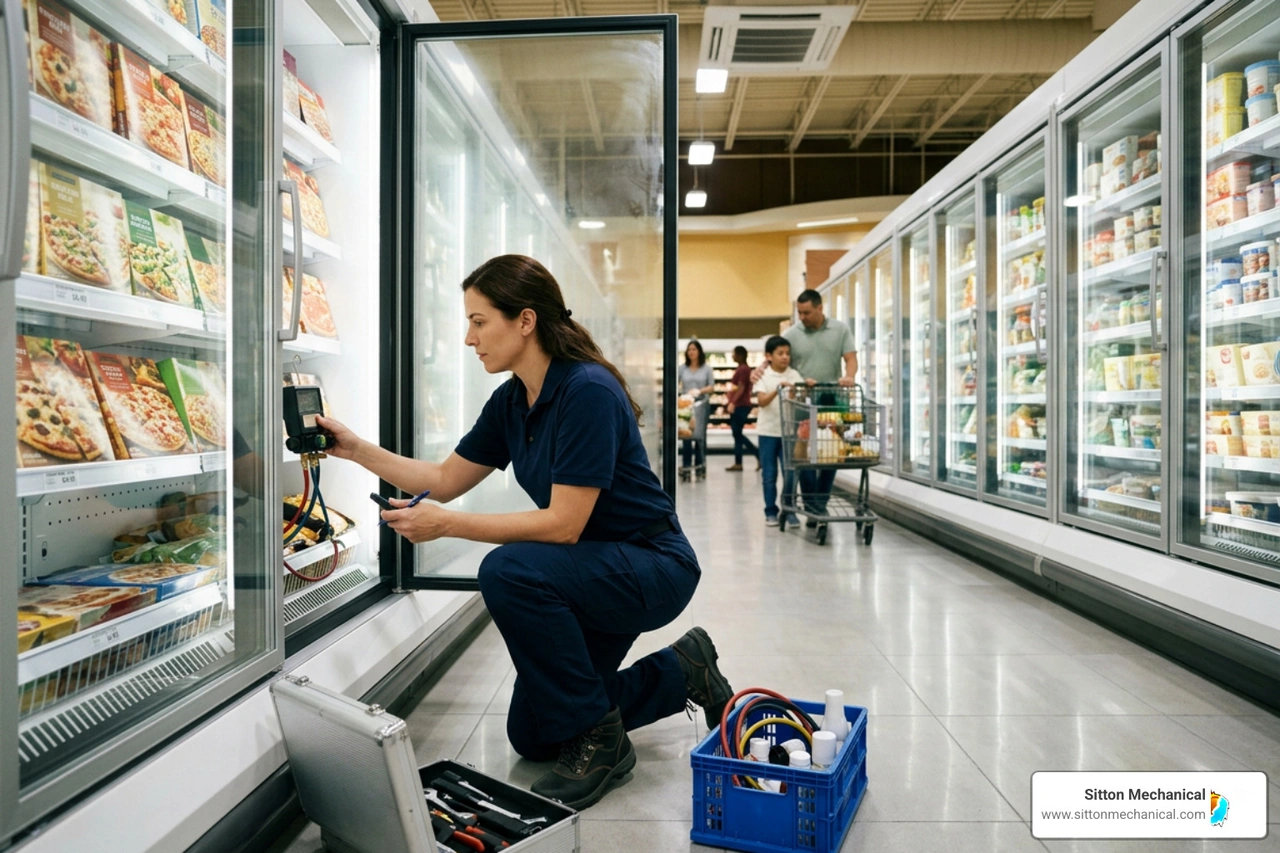
These climate conditions impact refrigeration systems in several ways:
- High Ambient Heat: When outdoor temperatures exceed 100°F, rooftop condensing units must work significantly harder to reject heat from the refrigerant. This extreme thermal stress can cause compressors to overheat and fail if the coils are dirty or the airflow is restricted.
- Intense Humidity: Humidity introduces moisture into the system. When humid air enters display cases during door openings, it condenses on the cold evaporator coils and freezes. This coil icing blocks airflow, forcing the system to run constantly without actually cooling the space.
- Power Surges and Storms: Severe Oklahoma weather frequently causes power flickers, brownouts, and blackouts. These electrical fluctuations can damage sensitive compressor motors and electronic control boards.
To combat these local challenges, we emphasize proactive measures. Installing phase monitors, utilizing high-quality strip curtains on walk-ins, and scheduling timely Refrigeration Repair Orlando services help prevent catastrophic system failures when the weather is at its worst.
Regulatory Compliance and Future-Proof Technologies
The commercial refrigeration industry is undergoing a massive regulatory shift. Under the federal American Innovation and Manufacturing (AIM) Act, the United States is phasing down the production and consumption of hydrofluorocarbons (HFCs)—the high Global Warming Potential (GWP) refrigerants that have powered grocery stores for decades.
As these traditional refrigerants become scarcer and more expensive, local grocers must look to the future. New remote refrigeration systems are facing strict GWP limits, meaning that simple retrofits of old systems will eventually become impractical. Planning your transition path now is the best way to avoid skyrocketing maintenance costs down the road.
Eco-Friendly Grocery Store Refrigeration Orlando Upgrades
For new construction or major store remodels, several future-proof refrigeration technologies have emerged:
- Transcritical CO2 (R-744) Systems: Carbon dioxide is a natural refrigerant with a GWP of 1. While highly efficient, transcritical CO2 systems operate at very high pressures and can lose efficiency in ambient temperatures above their 87.8°F critical point. This requires specialized system designs, such as parallel compression, to perform optimally during hot Oklahoma summers.
- A2L Refrigerants: These mildly flammable refrigerants offer a lower-GWP alternative to traditional HFCs. They allow for larger charge limits than highly flammable hydrocarbons and can often utilize similar piping configurations, making them a strong candidate for future retrofits.
- Glycol Secondary Systems: These systems use a primary refrigeration loop to chill a food-safe glycol mixture, which is then pumped throughout the store to cool display cases. This significantly reduces the overall refrigerant charge and minimizes the risk of leaks.
No matter which path you choose, working with a team that knows how to Handle Commercial Refrigeration Needs safely and in compliance with modern EPA standards is critical to safeguarding your investment.
Preventative Maintenance and Emergency Repair Services
Because commercial refrigeration systems operate continuously, they are subject to constant wear and tear. Regular preventative maintenance on commercial refrigeration systems can extend equipment lifespan and reduce costly emergency repairs.
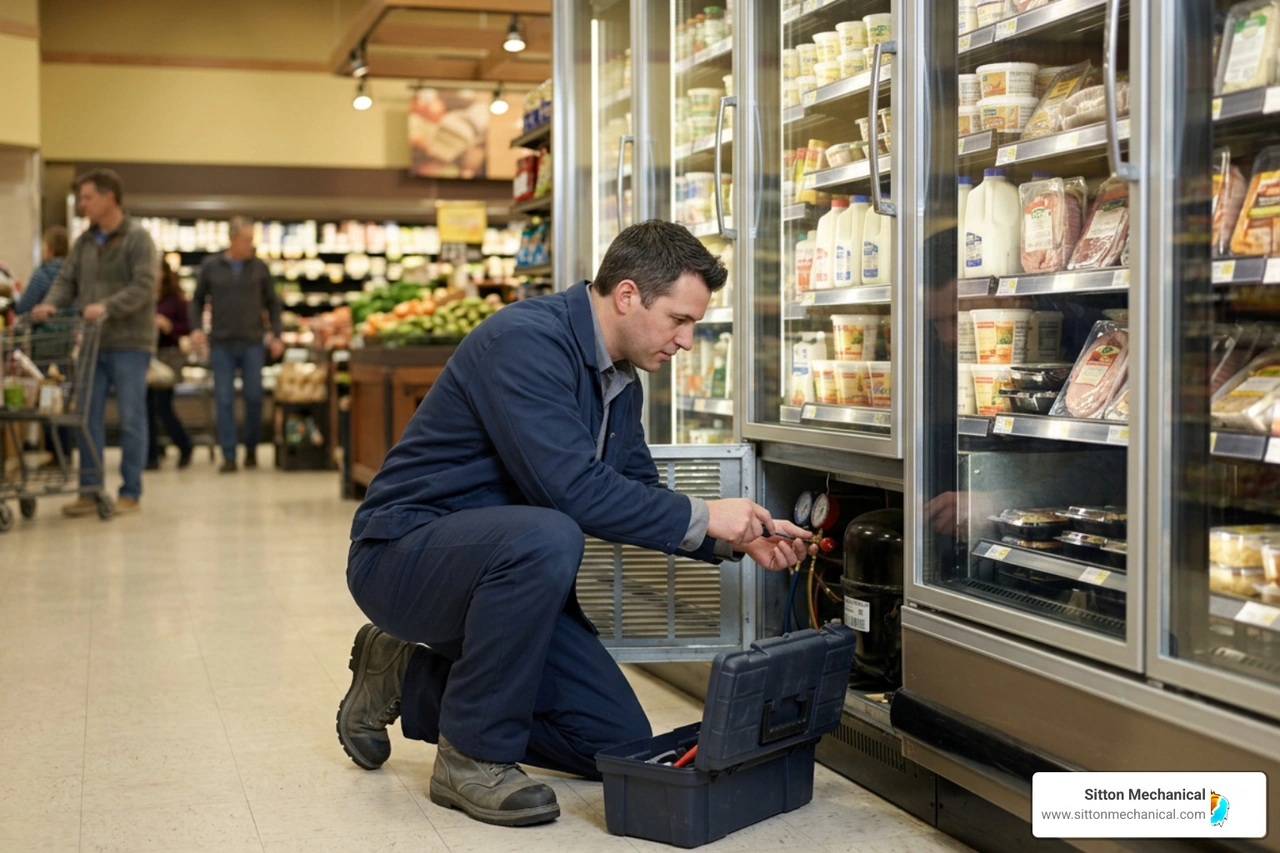
We recommend that grocery stores schedule comprehensive maintenance and inspections at least twice a year, with quarterly checks for high-traffic supermarkets. A robust preventative maintenance program includes:
- Coil Cleaning: Keeping condenser and evaporator coils free of dust and debris to ensure optimal heat transfer and prevent compressor strain.
- Refrigerant Level Checks: Identifying and repairing minor leaks early before they cause system downtime or environmental violations.
- Electrical Component Testing: Inspecting contactors, relays, and wiring to prevent sudden power failures.
- Drain Line Clearing: Removing algae and debris from condensate drain lines to prevent water backups and ice buildup.
Even with the best maintenance, unexpected breakdowns can happen. When a walk-in freezer or a main compressor rack goes down in the middle of the night, you need a rapid response. Our team provides reliable support to get your systems back online before product spoilage occurs. For a deeper dive into protecting your equipment, check out our Commercial Refrigeration Repair Orlando Guide.
Frequently Asked Questions about Supermarket Refrigeration
How often should grocery store refrigeration systems be serviced?
At a minimum, grocery store refrigeration systems should receive professional preventative maintenance twice a year—ideally in the spring before the summer heat hits, and in the fall. High-volume supermarkets with complex rack systems benefit greatly from quarterly inspections to catch minor issues before they escalate.
What are the signs that a commercial refrigerator needs repair?
Key warning signs include:
- Temperature Fluctuations: Cases struggling to hold their setpoints.
- Excessive Condensation or Frost: Ice forming on evaporator coils, walls, or product.
- Unusual Noises: Squealing, grinding, or loud clicking from compressors or fan motors.
- Constant Running: A system that never cycles off is working too hard to maintain temperature, indicating a leak, dirty coils, or a failing compressor.
How does high humidity affect supermarket display cases?
High humidity introduces excess moisture into the retail space. When warm, humid air enters open or frequently opened display cases, it condenses on the cold evaporator coils. This moisture quickly turns to ice, blocking airflow and insulating the coils, which prevents the system from cooling properly. It also causes unsightly fogging on glass doors, reducing product visibility.
Conclusion
Your refrigeration system is the lifeblood of your grocery store. Protecting your inventory, keeping your energy bills manageable, and ensuring food safety requires a combination of high-quality equipment, proactive maintenance, and expert technical support.
At Sitton Mechanical, LLC, we bring over 10 years of commercial refrigeration and HVAC experience to businesses throughout Stillwater, Perkins, Perry, Mulhall, and Orlando, Oklahoma. Our screened and certified technicians are committed to keeping your business running cold with upfront pricing, guaranteed work, on-time service, and flexible financing options.
Don't wait for an emergency to protect your inventory. Contact us today to learn more about our comprehensive Commercial Refrigeration services and keep your store operating at peak efficiency.