When Your Furnace Stops Working in Cushing, OK
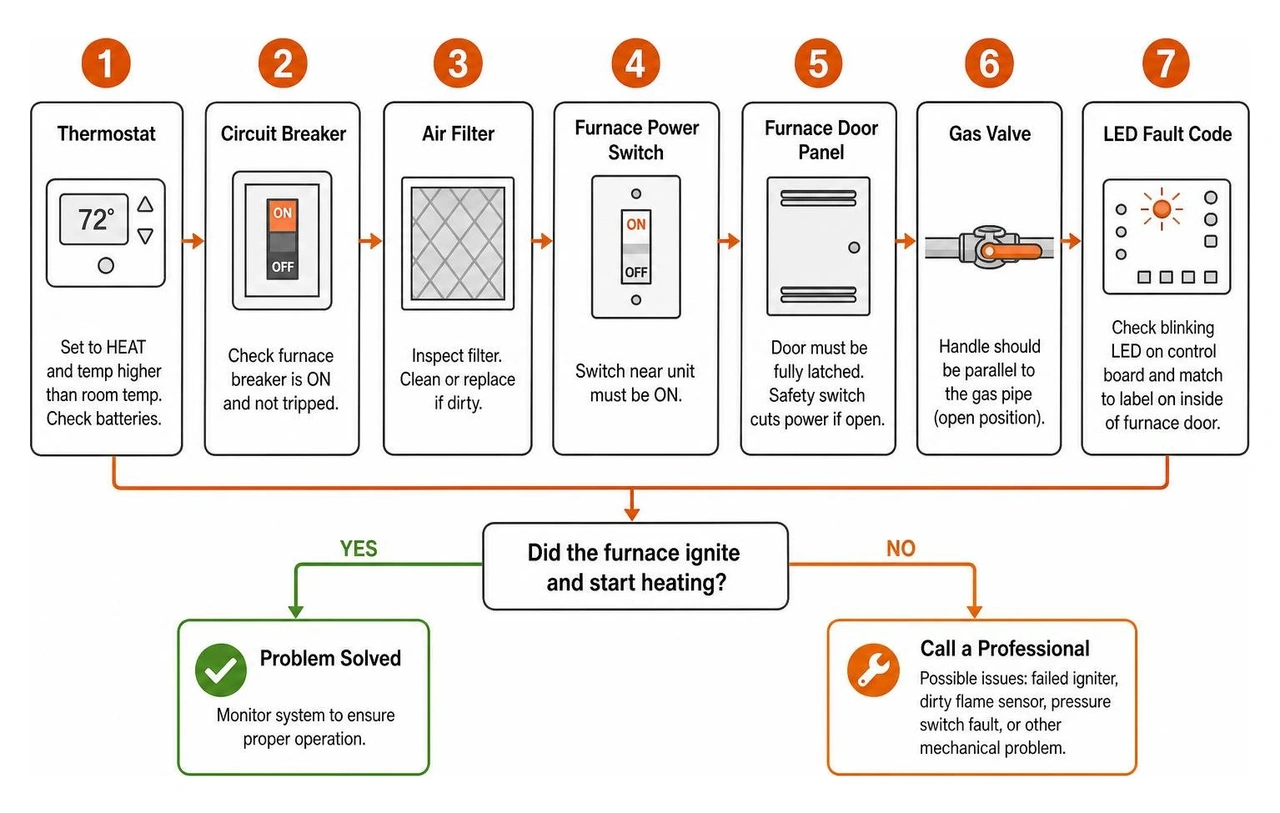
If you're dealing with a furnace not working in Cushing, here are the most common reasons and what to check first:
- Thermostat — Set to HEAT mode, temperature at least 3°F above room temp, batteries fresh
- Circuit breaker — Check your electrical panel for a tripped breaker; flip fully off, then back on once
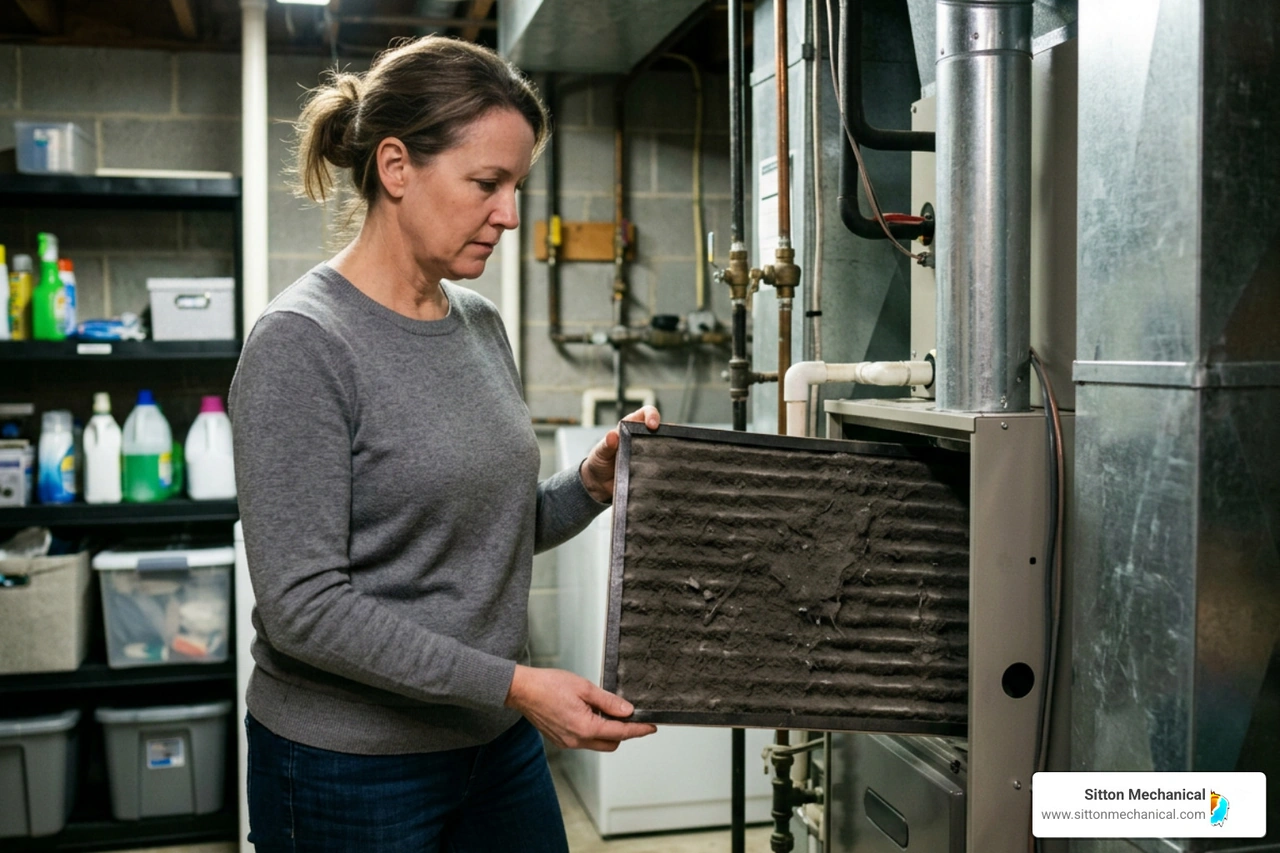
- Air filter — A clogged filter can overheat the system and shut it down completely
- Furnace power switch — The light-switch-style switch near the unit must be ON
- Furnace door panel — Must be fully latched or the safety switch cuts all power
- Gas valve — Handle should be parallel to the gas pipe (open position)
- LED fault code — Check the blinking light on the control board and match it to the label on the inside of the furnace door
If none of these quick checks restore heat, you likely have a failed igniter, dirty flame sensor, pressure switch fault, or a more serious mechanical issue that needs a technician.
Oklahoma winters are no joke. A day that hits 65°F can be followed by a night in the teens — sometimes with just a few hours' warning. And furnace breakdowns have a way of happening at exactly the wrong moment: late at night, right when a cold front rolls through central Oklahoma.
Cushing has roughly 4,480 households, and when temperatures drop, heating failures go from an inconvenience to a real safety concern — fast.
The good news? About 1 in 3 heating calls turn out to be a simple fix — dead thermostat batteries, a tripped breaker, or a dirty filter. This guide walks you through exactly what to check, what the common failures are, and when it's time to stop troubleshooting and call a pro.
Essential furnace not working cushing terms:
Troubleshooting a Furnace Not Working Cushing Homeowners Can Do
Before you pick up the phone to call for emergency service, there are several safe, simple diagnostics you can perform yourself. Taking a few minutes to run through these basic checks can save you time and quickly pinpoint whether the issue is a simple setting mistake or a deeper mechanical failure.
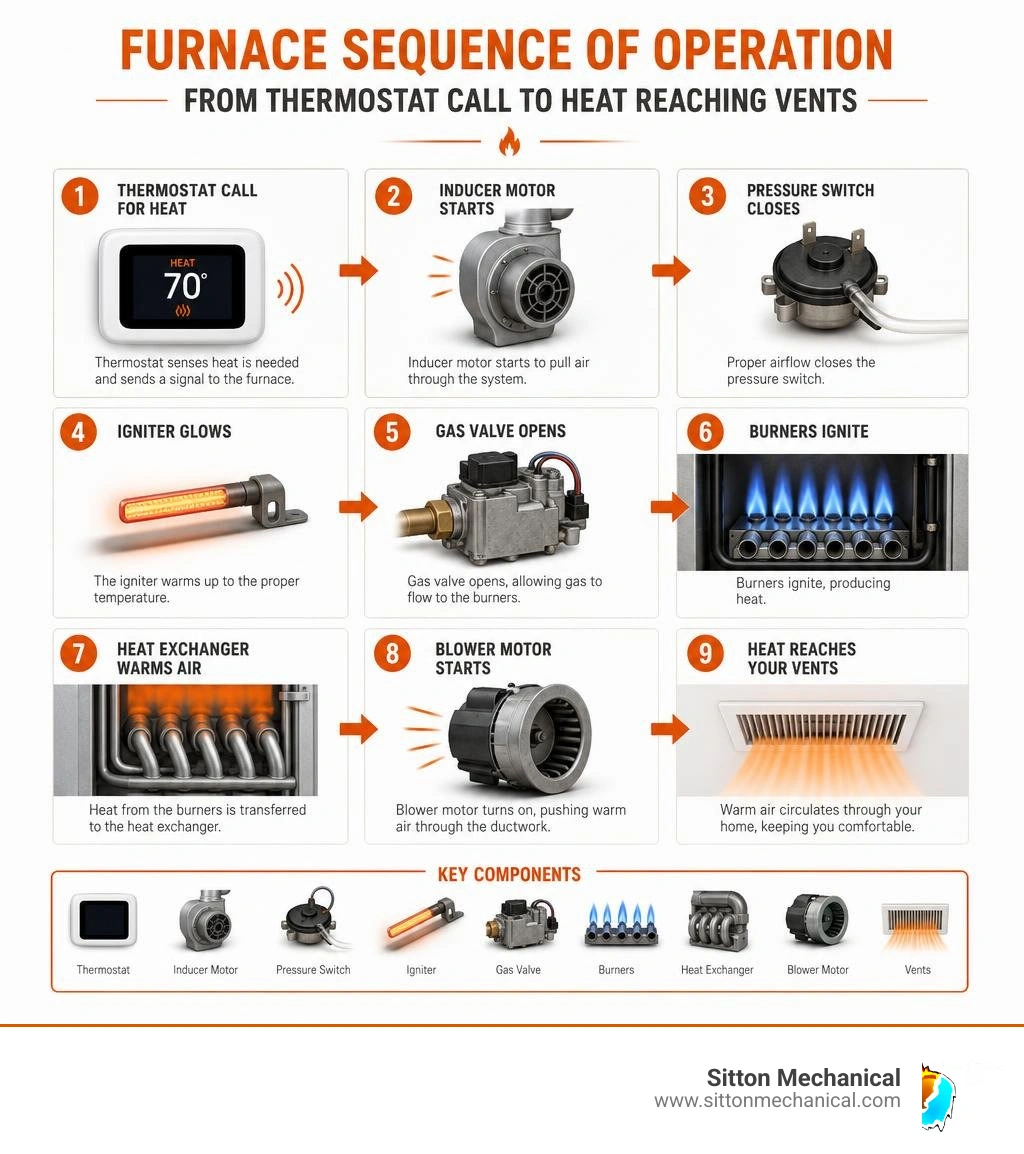
To help you visualize the process, here is the standard sequence we look at first:
Quick Checks for a Furnace Not Working Cushing Residents Can Try
If your heating system has suddenly gone quiet, start with these straightforward steps to rule out common power and airflow issues:
- Inspect the Thermostat Settings: It sounds simple, but a bumped thermostat is incredibly common. Make sure the system is set to "Heat" rather than "Cool" or "Fan Only." Ensure the set temperature is at least three degrees higher than the current room temperature to trigger a call for heat. If the display is blank, replace the batteries immediately.
- Check the Air Filter: A heavily soiled air filter choked with dust and household debris restricts airflow across the heat exchanger. This lack of airflow causes heat to build up rapidly inside the cabinet, tripping the high-limit safety switch and shutting down the burners. If you cannot see light through your filter, replace it immediately.
- Reset the Circuit Breaker: Head to your home's main electrical panel and locate the breaker labeled for your furnace. Even if it does not look tripped, flip it completely to the "Off" position and then firmly back to "On." Do not repeat this step if the breaker immediately trips again, as this indicates a serious electrical fault.
- Verify the Furnace Power Switch: Most furnaces have a switch nearby that resembles a standard household light switch. It is easy to accidentally flip this switch off when retrieving items from a utility closet. Ensure it is switched to the "On" position.
- Secure the Blower Door Panel: Furnaces feature a safety door switch that cuts all electrical power to the system if the blower compartment panel is loose or not fully latched. If you recently changed your filter, double-check that the door panel is completely flush and securely latched.
- Check the Gas Shut-Off Valve: Ensure that gas is actually reaching your heating system. The handle on the gas line valve must be positioned parallel to the pipe to allow fuel to flow.
If you want to dive deeper into the technical steps of diagnosing a system that refuses to fire up, you can read this Furnace Not Turning On: Complete Diagnostic Guide for Gas and Electric | ServiceMag . To keep your heating system from acting up in the first place, scheduling regular maintenance is key. Check out our More info about furnace tune-ups to learn how preventative care protects your home.
Understanding Furnace LED Flash Codes
Every modern gas furnace manufactured over the last few decades features a diagnostic LED light on its integrated control board. This light is typically visible through a small plastic viewport window on the lower blower door panel.
When your furnace experiences an error or goes into lockout mode, this light will blink in a specific sequence—similar to Morse code—to tell you exactly what is wrong.
To read the code, count the number of fast and slow flashes. Once you have the sequence, look at the legend printed on the inside of the furnace door panel to translate the code. Common fault codes include:
- Single Flash or Continuous Rapid Flashing: Often indicates a normal call for heat or a system reset.
- Two Flashes: Typically points to a system lockout due to multiple failed ignition attempts.
- Three Flashes: Usually indicates a pressure switch fault, meaning the system is not venting exhaust safely.
- Four Flashes: Points to an open high-limit switch, which is almost always caused by restricted airflow from a dirty filter.
- Seven Flashes: Often indicates a weak flame sensor signal, meaning the system cannot verify if the burners have lit safely.
For more details on interpreting these diagnostic signals, refer to this Heater Not Working? Try Our Furnace Troubleshooting Guide .
Common Causes of Furnace Heating Failures
According to the U.S. Department of Energy, more than half of a typical household's energy bill (55%) goes toward heating and cooling. When your system stops producing warm air, it is usually because one of a few critical components has failed or become dirty.
If you want to explore a comprehensive list of heating issues, you can review this Furnace Troubleshooting Guide | Trane.
The Hot Surface Igniter and Flame Sensor
The hot surface igniter (HSI) and the flame sensor are two of the most active—and fragile—components in a gas furnace.
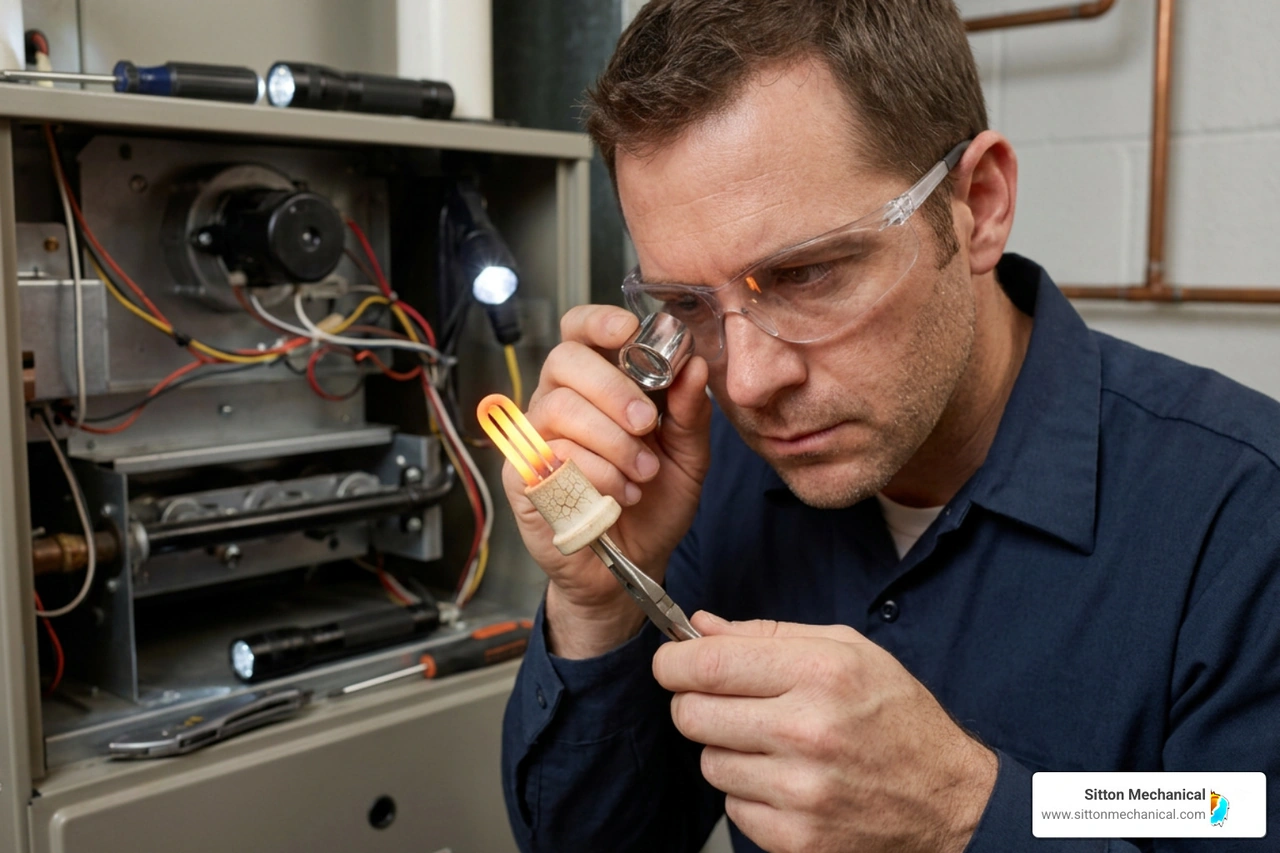
The igniter is a small, ceramic element made of silicon carbide or silicon nitride that glows at temperatures up to 2,000°F to ignite the incoming gas. Because of the intense heat cycles it endures, the igniter naturally wears out, becomes brittle, and cracks over time. A cracked igniter cannot heat up, leaving your furnace clicking repeatedly without ever lighting.
The flame sensor, on the other hand, is a thin metal rod that sits directly in the path of the burner flame. It uses a process called flame rectification to send a tiny electrical current to the control board, confirming that a safe flame is present.
Because it sits in raw flame, the sensor eventually accumulates a thin, invisible layer of carbon buildup and silica oxide. When this happens, it can no longer detect the flame. The furnace will light for three to five seconds and then immediately shut down as a safety precaution.
Cleaning a dirty flame sensor is a delicate task that requires polishing the rod with an ultra-fine abrasive, but if the sensor is physically damaged, it must be replaced. For expert assistance with these precise components, you can find More info about heating repairs.
Airflow Restrictions and High-Limit Switches
A furnace relies on a steady, unobstructed stream of air to keep its heat exchanger at a safe operating temperature. If that airflow is restricted, the heat exchanger will quickly overheat.
To prevent the metal from cracking or causing a fire, furnaces are equipped with a high-limit safety switch. When temperatures exceed safe thresholds, this switch opens, cutting power to the gas valve to extinguish the burners immediately. However, the blower motor will continue to run continuously in an attempt to cool down the overheated heat exchanger.
This cycle of starting, quickly overheating, shutting down, and cooling off is known as short-cycling. The primary culprit is almost always a clogged air filter, though blocked return grilles, closed supply vents, or a failing blower motor capacitor can also cause the system to overheat. You can read more about how these safety devices protect your home by reviewing this guide on Understanding Furnace Limit Switches | InspectAPedia.
Safety Protocols for Heating System Malfunctions
When dealing with a gas furnace, safety must always be your top priority. Gas furnaces utilize natural gas or propane and produce combustion byproducts like carbon monoxide (CO). Understanding how to handle potential hazards is essential for protecting your household.
What to Do If You Smell Gas
Natural gas is naturally odorless, but utility companies add a chemical called mercaptan to give it a distinct, highly noticeable "rotten eggs" or sulfur smell. If you ever detect this odor near your furnace or throughout your home:
- Do Not Attempt to Locate the Leak: Do not search for the source of the leak yourself.
- Avoid Electrical Sparks: Do not flip any light switches, unplug appliances, use your household phone, or light matches. Any small spark can ignite the gas.
- Evacuate Immediately: Gather all occupants and pets and leave the home right away. Leave the front door open behind you to help ventilate the space.
- Call for Help from Outside: Once you are a safe distance from the property, call 911 or your local gas utility provider.
- Do Not Return: Do not re-enter the home until emergency responders or utility technicians have officially cleared it as safe.
Is It Safe to Run a Malfunctioning Furnace?
If your furnace is short-cycling, making unusual noises, or struggling to heat, do not force it to keep running.
Continuing to run a malfunctioning furnace can turn a minor issue into a major, costly failure. For example, repeated overheating can stress the metal of the heat exchanger, eventually leading to cracks.
A cracked heat exchanger is a critical safety hazard because it allows dangerous combustion gases—including carbon monoxide—to escape directly into your home's breathing air. Carbon monoxide is tasteless, odorless, and invisible, making it extremely dangerous. Ensure you have working carbon monoxide detectors installed on every level of your home, and shut down your heating system immediately if it is not operating normally.
Deciding Between Furnace Repair and Replacement
When your heating system acts up, you face a common homeowner dilemma: should you invest in repairing your existing unit, or is it time to consider a complete replacement?
To help you make the right choice, we often recommend using the 5,000 Rule. This simple industry guideline helps you evaluate the financial practicality of a repair:
$$text{Age of the System (in Years)} times text{Estimated Repair Cost} = text{Financial Index Value}$$
If the resulting index value is greater than 5,000, investing in a new, high-efficiency system is generally the more economical and reliable choice for the long term.
| Decision Factor | Choose Furnace Repair | Choose Furnace Replacement |
|---|---|---|
| System Age | Under 10 to 12 years old | Over 15 years old |
| Repair History | Rare, occasional minor issues | Frequent breakdowns and service calls |
| Energy Efficiency | Monthly utility bills remain stable | Energy bills are rising steadily |
| Heat Exchanger | Structurally sound and intact | Cracked, rusted, or structurally compromised |
| Heating Performance | Even, consistent comfort throughout | Uneven heating, cold spots, or constant cycling |
When to Call a Professional for a Furnace Not Working Cushing
While checking a thermostat setting or replacing a dirty air filter are great DIY tasks, most furnace issues require professional expertise. You should always call a licensed technician for:
- Electrical Diagnostics: Testing control boards, capacitors, and multi-speed blower motors requires specialized diagnostic meters and training.
- Gas Valve and Pressure Adjustments: Handling gas lines, measuring manifold pressure, and checking combustion safety should never be attempted without proper tools and certifications.
- Inducer and Blower Motor Replacements: These heavy mechanical assemblies must be precisely balanced and wired to prevent premature wear or electrical hazards.
If you are experiencing complex heating issues, we can help. Learn more about our professional diagnostic services by visiting our More info about furnace repairs.
When to Choose Furnace Replacement
If your furnace is approaching the end of its typical 15-to-20-year lifespan, replacing it is often the wisest path forward.
A new furnace not only eliminates the worry of sudden winter breakdowns but also dramatically improves your home's energy efficiency. Modern systems feature advanced blowers and modulating gas valves that use significantly less energy to keep your home warm.
When planning a replacement, proper sizing is crucial. For example, a typical 2,000-square-foot home in our region generally requires a furnace capacity between 50,000 and 80,000 BTUs to handle our freezing winter nights efficiently without wasting energy. To explore your options for a modern, high-efficiency heating system, check out our More info about furnace replacement.
Frequently Asked Questions About Cushing Heating Systems
To help you keep your home warm and efficient all winter long, we have gathered answers to some of the most common questions we receive from homeowners in Cushing and the surrounding areas. For comprehensive seasonal care, you can also explore our HVAC Maintenance Cushing OK page.
How can I prevent my furnace from failing during Oklahoma winters?
The single most effective way to prevent mid-winter breakdowns is to schedule a professional heating tune-up in September or October, before the first cold snap arrives.
Additionally, you should inspect your air filter every 30 days and replace it as soon as it looks dirty. In Oklahoma, agricultural dust, seasonal winds, and pet dander can clog filters much faster than the standard 90-day manufacturer recommendation. Keeping the area around your furnace clean and ensuring all supply vents and return grilles are unblocked also keeps your system running smoothly.
Why does my furnace blow cold air instead of heat?
If your furnace is blowing cold air, check your thermostat's fan setting first. If the fan is set to "On" instead of "Auto," the blower motor will run continuously even when the furnace burners are off, blowing room-temperature air through your vents.
If the fan setting is correct, the cold air is likely caused by a tripped high-limit safety switch (often due to a clogged filter) or a failed ignition sequence (such as a dirty flame sensor or broken igniter) that prevents the burners from heating the air.
What size furnace is necessary for a typical Cushing home?
A typical home in the Cushing area requires approximately 30 to 40 BTUs of heating capacity per square foot. For a standard 2,000-square-foot home, this translates to a furnace capacity of 50,000 to 80,000 BTUs.
However, the exact size depends on several factors unique to your property, including the quality of your insulation, the age of your windows, your home's layout, and local building codes. A professional load calculation is the best way to ensure your new system is perfectly sized.
Conclusion
A heating failure during a bitter Oklahoma cold snap is stressful, but you do not have to handle it alone. At Sitton Mechanical, LLC, we bring more than a decade of hands-on experience to every job, serving homeowners across Cushing, Stillwater, Perkins, Morrison, Glencoe, Perry, Mulhall, Orlando, Ripley, and Sumner.
Our team of screened and certified technicians is dedicated to keeping your home safe and comfortable. We are proud to offer straightforward, upfront pricing, guaranteed workmanship, and flexible financing options to fit your budget. Whether you need a quick repair, a seasonal tune-up, or a complete system replacement, we are here to provide reliable, on-time service.
If you are dealing with a cold home or have questions about your heating system, let us help. Visit our Locations Cushing page to connect with our local dispatch team and schedule your service today!