
What to Do When Your AC Is Not Cooling in Cushing, OK
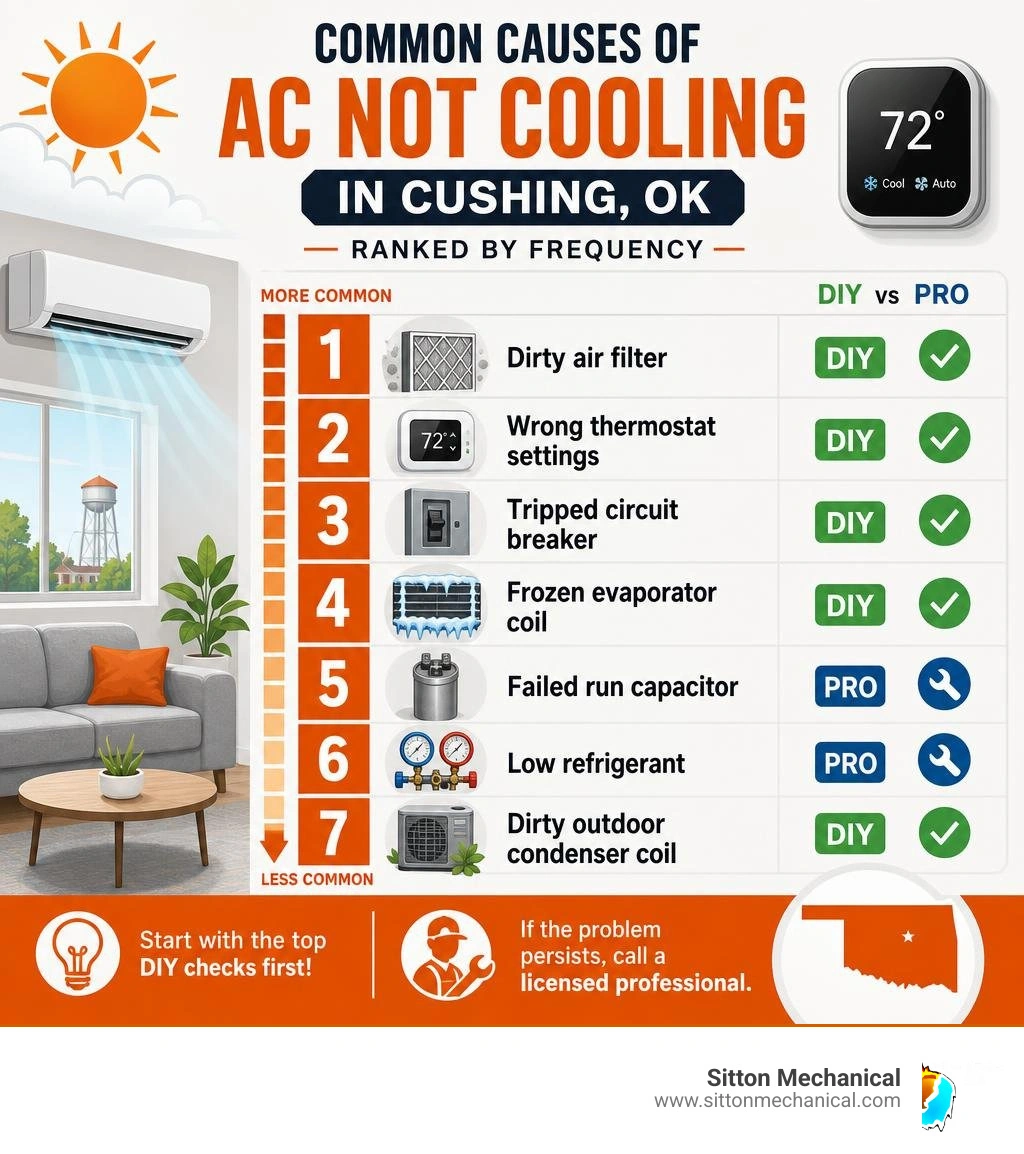
If your AC is not cooling in Cushing, you're not alone — and the fix is often simpler than you think. Here are the most common causes and first steps, ranked by how often they actually cause the problem:
- Dirty air filter — Check and replace it first. This causes roughly 9 out of 10 poor-cooling complaints.
- Wrong thermostat settings — Make sure it's set to "Cool" mode with the fan on "Auto."
- Tripped circuit breaker — Check your electrical panel for a tripped breaker tied to the outdoor unit.
- Frozen evaporator coil — Look for ice on your indoor unit or refrigerant lines. Turn the system off to thaw.
- Failed run capacitor — Accounts for 25–30% of "running but not cooling" service calls. Requires a technician.
- Low refrigerant — A leak will cause warm air and ice buildup. Needs professional repair.
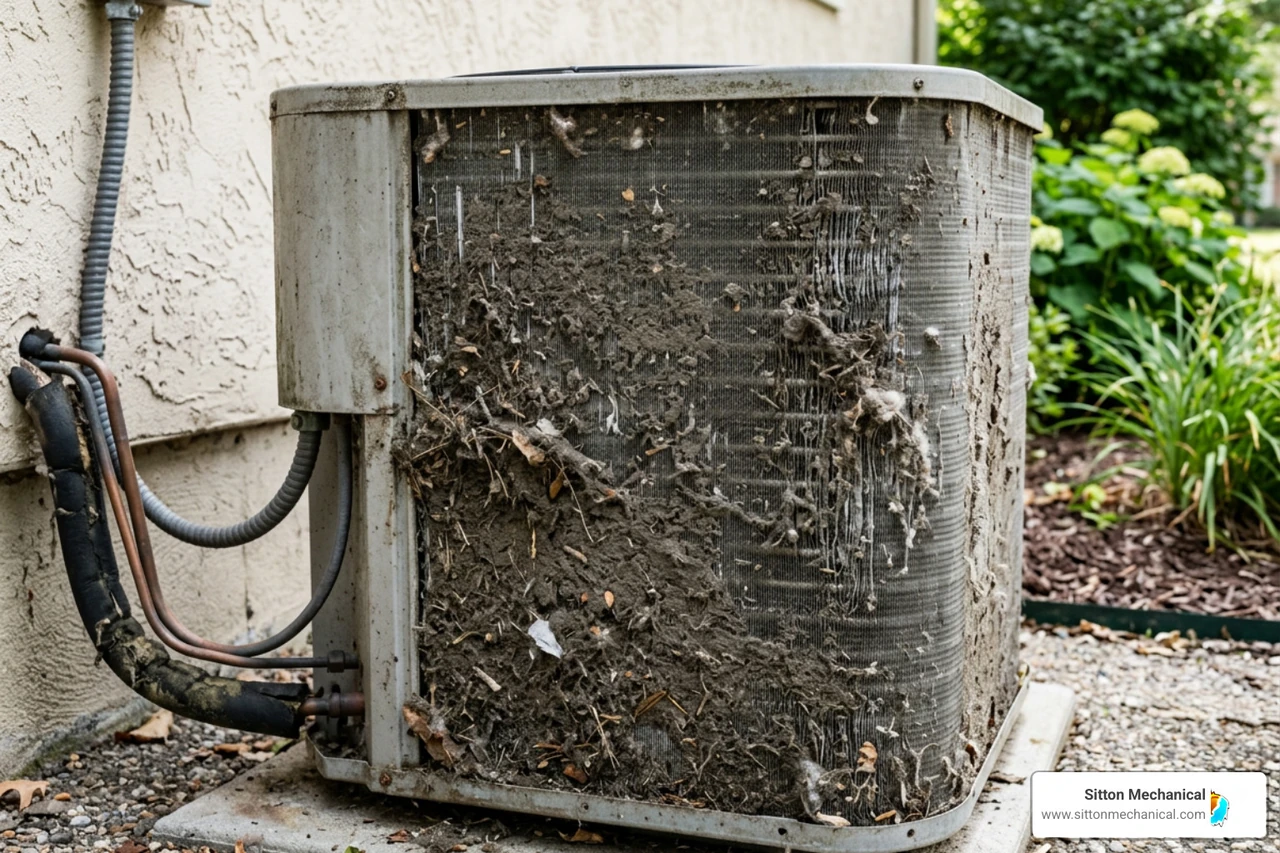
- Dirty outdoor condenser coil — Blocks heat from escaping. Can often be rinsed with a garden hose.
There's a specific kind of frustration that hits when your AC is clearly running — the fan is blowing, the system is humming — but the air coming out just isn't cold. In Cushing, Oklahoma, where summer temperatures routinely climb past 100°F, a non-cooling AC isn't just uncomfortable. It can become a health risk fast.
The good news? Many causes are easy to spot and some you can fix yourself in under 10 minutes. This guide walks you through everything — from quick DIY checks to knowing when it's time to call a pro.
Key ac not cooling cushing vocabulary:
Quick DIY Checks for an AC Not Cooling Cushing Homeowners Can Do
Before you pick up the phone to call for backup, there are a few basic components you can check yourself. It is incredibly common for a completely non-responsive or poorly cooling system to be sidelined by a minor, easily correctable issue. By performing a quick five-minute audit of your system, you might save yourself a service call.
If you want to dive deeper into how these components interact, you can read more about Troubleshooting central air systems to understand the mechanics. If these basic checks do not resolve your issue, you can always learn More info about AC repair services to get professional help.
Checking Your Thermostat Settings
It sounds simple, but you would be surprised how often a thermostat setting is the true culprit behind an ac not cooling cushing emergency.
- Verify the Mode: Ensure your thermostat is explicitly set to "Cool." During seasonal transitions, or if someone else in the house adjusted the settings, it may have been accidentally switched to "Heat" or "Fan Only."
- Check the Fan Setting: Always set your fan to "Auto" instead of "On." When the fan is set to "On," the blower runs continuously even when the outdoor compressor isn't actively cooling. This circulates unconditioned, humid air back into your home, making it feel warm and sticky.
- Inspect the Batteries: If your thermostat has a blank or fading digital screen, replace the batteries immediately. A low battery can prevent the thermostat from sending the electrical signal to turn on your outdoor condenser.
- Lower the Setpoint: Set the temperature at least 3 to 5 degrees below the current room temperature to force the system to call for cooling.
Inspecting and Replacing the Air Filter
A dirty air filter is responsible for roughly 9 out of 10 service calls for poor AC cooling. When a filter becomes clogged with Oklahoma dust, pet dander, and pollen, it severely restricts airflow. Without sufficient air flowing over your indoor evaporator coil, the coil cannot transfer heat effectively. This can cause the coil to drop below freezing, turning condensation into a solid block of ice that completely blocks airflow.
To test your filter, perform the "light test." Hold your filter up to a light source. If you cannot see light passing through the fibers, it is completely choked and must be replaced. Swapping out a clogged filter is one of the easiest ways to improve performance, and it can reduce your air conditioner's energy consumption by 5% to 15% when replaced regularly. For more preventative tips, check out More info about AC maintenance.
Resetting a Tripped Circuit Breaker
Your air conditioning system relies on two separate high-voltage circuits: one for the indoor blower unit (often located in your closet or attic) and one for the outdoor condenser unit. If a power surge occurs, or if the outdoor unit draws too much power on a blistering 100°F Cushing day, the circuit breaker in your main electrical panel may trip.
If the outdoor breaker trips, your indoor unit will continue to blow warm air because the indoor fan is still getting power, but the outdoor compressor and fan are completely dead. To safely check and reset your breaker:
- Locate your home’s main electrical panel.
- Look for the switches labeled "AC," "Air Conditioner," or "Condenser."
- A tripped breaker will usually be positioned halfway between "On" and "Off," or show a red indicator.
- Flip the breaker completely to the "Off" position first, then flip it firmly back to "On."
- Wait a few minutes to see if the outdoor unit starts up and begins producing cool air.
Common Reasons Your Air Conditioner Runs But Fails to Cool
If your thermostat is set correctly, your filter is clean, and your breakers are on, but you are still dealing with an ac not cooling cushing situation, the problem is likely internal. Let's look at the mechanical and electrical issues that commonly cause a system to run without lowering the indoor temperature.
To get a broader perspective on these mechanical failures, you can consult this Carrier guide on why AC is not blowing cold air.
Frozen Evaporator Coils and Airflow Blockages
A frozen evaporator coil is behind roughly 30% of "AC not cooling" calls. Your indoor coil relies on a steady stream of warm indoor air to keep it warm enough to prevent the moisture on its metal fins from freezing. If that airflow is restricted by a dirty filter, blocked return grilles, or a failing blower motor, the temperature of the coil drops below 32°F.
Once ice begins to form, it acts as an insulating barrier, preventing the refrigerant inside the coil from absorbing heat from your home. This creates a compounding loop: the coil gets colder, more ice forms, and eventually, no air can pass through your vents at all. If you notice ice on the copper lines leading into your indoor unit or frost on the outer cabinet, turn your system off immediately at the thermostat and switch the fan to "On" to allow the ice to melt. You can read More info about HVAC system not cooling to understand how to handle frozen coils safely.
Low Refrigerant and Leak Symptoms
Refrigerant is the lifeblood of your air conditioning system. It circulates in a closed loop, absorbing heat from your indoor air and carrying it outside to be released. A very common misconception is that refrigerant is "used up" over time like gasoline in a car. In reality, refrigerant should never decrease. If your system is low on charge, you have a refrigerant leak.
A refrigerant leak or low refrigerant causes 15–20% of AC running but not cooling issues. Key signs of a leak include:
- Warm or lukewarm air blowing from your supply registers.
- A persistent hissing or bubbling sound coming from the indoor or outdoor unit.
- Ice forming on the copper refrigerant lines or the indoor evaporator coil.
- The system running continuously without ever reaching your thermostat's set temperature.
Additionally, as we move through 2026, the HVAC industry is navigating the EPA's phasedown of older refrigerants like R-410A in favor of environmentally friendly alternatives like R-454B. If you have an older system with a leak, repairing it requires specialized handling and certified technicians who understand these modern transitions.
Failed Capacitor or Contactor
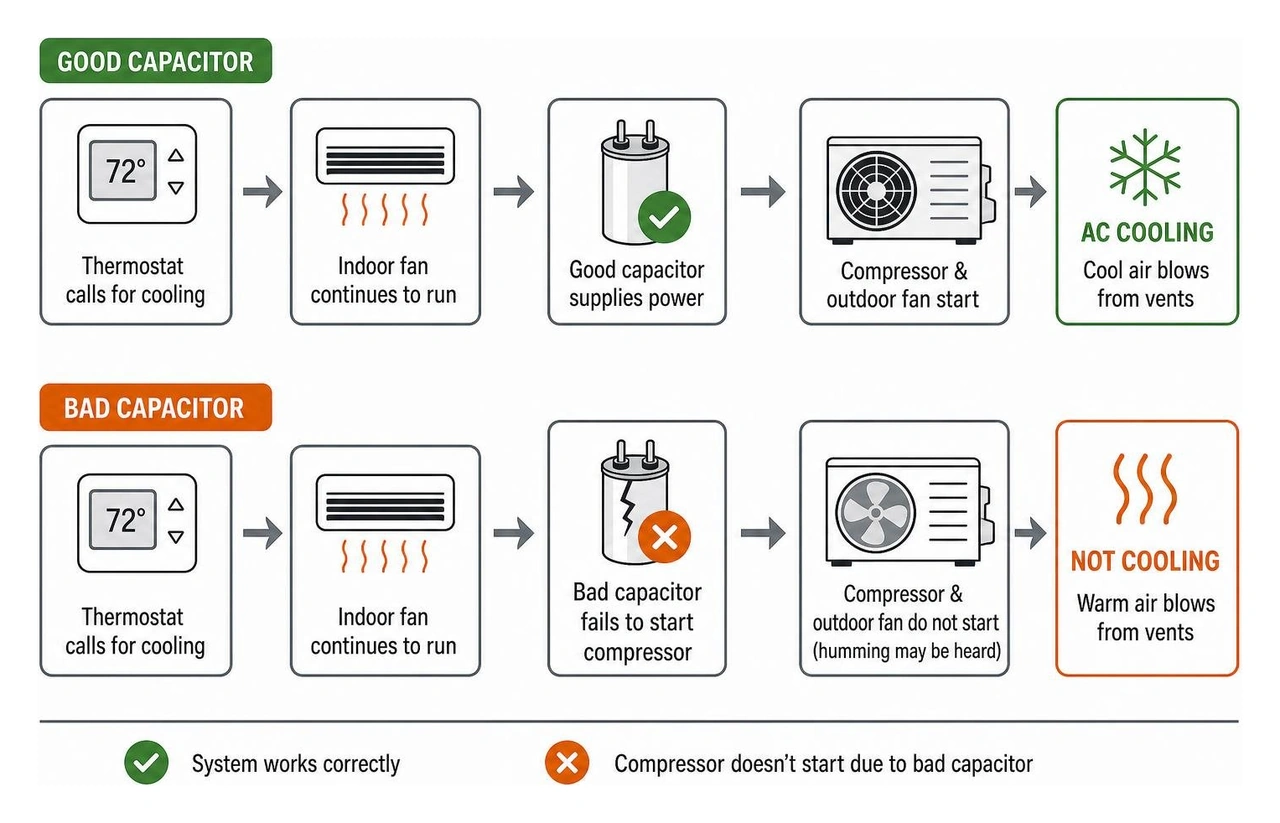
If you walk outside to your outdoor condenser unit and hear a faint humming sound, but the top fan isn't spinning, you are likely dealing with a failed run capacitor. A failed capacitor accounts for 25–30% of AC running but not cooling service calls, making it the single most common electrical failure we see in Cushing.
The run capacitor acts like a heavy-duty battery that provides the continuous electrical torque needed to keep your compressor and outdoor fan motor running. Because capacitors are highly sensitive to heat and electrical fluctuations, Oklahoma's intense summer heatwaves can cause them to degrade, bulge, or pop entirely.
Similarly, your contactor—the electrical switch that physically connects high-voltage power to your compressor—can become pitted, burned, or infested with small insects, preventing the outdoor unit from engaging. Replacing these electrical components is a quick and affordable fix, but because they carry high voltage, they should always be handled by a professional.
How Oklahoma's Summer Climate Impacts Your AC Performance
Living in Cushing means dealing with unpredictable, intense weather. Our summers are characterized by sustained high temperatures and thick, heavy humidity that puts an immense mechanical strain on residential air conditioning systems.

To ensure your system is prepared to handle these intense conditions, you can find More info about AC tune ups to keep your cooling system running smoothly.
The Dehumidification Burden on Your AC Not Cooling Cushing Systems
An air conditioner has two primary jobs: lowering the air temperature (sensible cooling) and removing moisture from the air (latent cooling). In high-humidity climates like ours, your AC must work twice as hard.
On a humid 95°F day, your system may dedicate up to 30% to 40% of its total cooling capacity just to pull water vapor out of the air before it can even begin to lower the actual temperature in your home. If your system is slightly low on refrigerant, has dirty coils, or has minor duct leaks, this extra dehumidification burden will quickly overwhelm it. The result is a home that feels warm, sticky, and clammy, with an air conditioner that runs 24/7 without ever reaching your target temperature.
Preventing Peak Summer Breakdowns with Routine Maintenance
The best way to survive an Oklahoma summer is to prevent breakdowns before they occur. Just like you wouldn't drive your car across the country without checking the oil, you shouldn't force your AC to run through a triple-digit summer without a professional check-up.
Routine maintenance keeps your system running at peak efficiency. During a professional tune-up, our technicians clean the outdoor condenser coils to ensure heat can escape easily, check electrical connections to prevent capacitor failures, and verify that your refrigerant charge is perfectly balanced. A properly charged and clean AC system should produce a 15–20°F temperature differential (or "split") between the warm air entering your return vents and the cool air blowing out of your supply registers. You can explore More info about HVAC maintenance to learn how regular service extends your system's lifespan.
When to Call a Professional for Cushing AC Repair
While checking your thermostat and changing an air filter are excellent DIY projects, air conditioning systems are complex machines that combine high-voltage electricity, pressurized chemical refrigerants, and sensitive mechanical parts. Attempting to fix these issues yourself without proper training and tools can result in severe injury, voided equipment warranties, or permanent damage to your system.
If you are dealing with a cooling emergency that goes beyond a dirty filter, you can find More info about emergency AC repair to get fast, reliable support.
Signs of a Failing Compressor
The compressor is the absolute heart of your air conditioning system. Located inside the outdoor unit, it pumps refrigerant through your system to facilitate heat transfer. If your compressor fails, your system cannot cool your home.
Signs of a struggling or failing compressor include:
- Hard Starting: Your outdoor unit makes a loud, violent shaking or clicking sound when it tries to turn on.
- Loud Noises: Screeching, clattering, or growling sounds coming from the outdoor cabinet indicate failing internal bearings.
- Tripping Breakers: A failing compressor motor will draw excessive electrical current, causing your main circuit breaker to trip repeatedly.
- Warm Air: The outdoor fan is spinning, but the compressor is not pumping refrigerant, resulting in warm air blowing inside.
Because the compressor is the most expensive component in your AC, a failure on an older system often means it is more practical to invest in an upgrade. You can find More info about AC replacement to weigh your options.
Resolving Complex Electrical and Refrigerant Issues
Handling electrical components and refrigerant requires specialized equipment and training. Our certified technicians use calibrated multimeters to test capacitors and contactors safely, preventing dangerous electrical arcs.
Furthermore, federal law requires EPA Section 608 certification to handle, purchase, or charge chemical refrigerants. If your system has a leak, a professional technician must use electronic leak detectors or fluorescent dyes to pinpoint the exact location of the leak, repair the copper tubing, evacuate the system using a vacuum pump to remove moisture, and recharge it with the exact weight of refrigerant specified by the manufacturer.
Frequently Asked Questions About AC Not Cooling Cushing
Why is My AC Not Cooling Cushing Homes Efficiently?
If your system is running but your home still feels warm, several factors could be reducing its efficiency. The most common culprit is restricted airflow caused by a dirty air filter or blocked return grilles.
Additionally, ductwork leaks are a massive source of wasted energy. The average home loses 20% to 30% of its conditioned air through leaks, cracks, and disconnections in the duct system. If your ducts run through a scorching Oklahoma attic (where temperatures can easily exceed 140°F), a disconnected duct will pull superheated attic air directly into your living space, completely overpowering your AC's cooling capacity.
How long should it take for my home to cool down after troubleshooting?
Once you have resolved a minor issue (like replacing a clogged filter or resetting a breaker), you should feel a noticeable temperature drop at your supply registers within 15 to 30 minutes.
However, cooling down the entire structure of your home takes time. A healthy, properly sized air conditioning system is designed to lower your home's indoor temperature by approximately 1°F to 2°F per hour. If your home has heat-soaked walls, furniture, and flooring after being without cooling for several hours, it may take several hours of continuous operation for the system to bring the home back down to a comfortable temperature.
Should I turn off my AC if it is running but not blowing cold air?
Yes, absolutely. If your air conditioner is running continuously but failing to cool your home, you should turn it off at the thermostat immediately.
Running a malfunctioning system puts immense mechanical stress on the compressor. If the system is low on refrigerant, the compressor can quickly overheat and burn out, turning a straightforward leak repair into an expensive system replacement. Additionally, if your system has frozen coils, turning it off allows the ice to melt safely before a technician arrives to diagnose the underlying airflow or refrigerant issue.
Conclusion: Professional HVAC Services in Cushing, OK
When summer temperatures peak, you need an HVAC partner you can trust to restore comfort to your home quickly and safely. At Sitton Mechanical, LLC, we bring over 10 years of dedicated experience serving Cushing and our surrounding communities, including Stillwater, Perkins, Morrison, Glencoe, Perry, Mulhall, Orlando, Ripley, and Sumner.
Our commitment to our neighbors is simple: we provide highly trained, screened, and certified technicians who arrive on time and diagnose your system accurately. We stand behind all of our work with robust guarantees and offer flexible financing options to make sure your family stays cool and comfortable when it matters most.
Don't spend another miserable hour in a hot house. If your DIY troubleshooting didn't do the trick, let our friendly team get your system running perfectly again. Schedule an appointment with Sitton Mechanical today!