
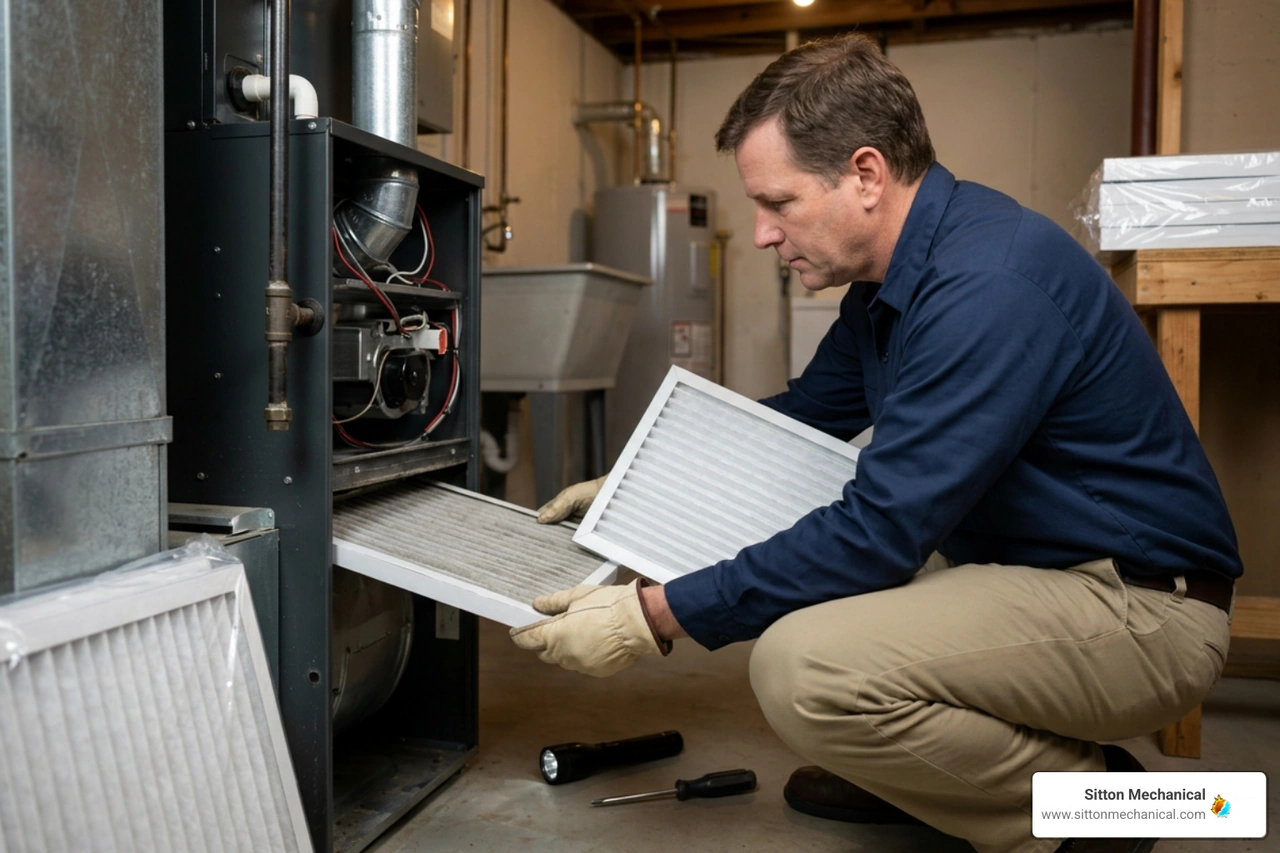
AC Filter Replacement in Cushing Starts With Clean, Steady Airflow
AC filter replacement Cushing homeowners and business owners can count on usually means changing a dirty filter every 60 to 90 days. Check it sooner during hot, dusty weather or if you have pets, allergies, or heavy system use.
| Quick check | What it means |
|---|---|
| Weak airflow from vents | The filter may be clogged |
| More dust indoors | The filter may no longer capture particles well |
| Longer cooling cycles | Restricted airflow can make the system work harder |
| Musty odors or allergy flare-ups | A clean filter may help improve indoor air quality |
A neglected filter can restrict airflow, add strain to your air conditioner, and raise energy use. Replacing a clogged filter with a clean one can reduce AC energy consumption by roughly 5% to 15%, while regular changes also help keep dust from reaching sensitive system parts.
The right replacement is not always the highest-rated filter. Your filter must fit the return opening correctly and provide filtration your system can handle without creating excess airflow resistance.
I’m Richard Sitton, and next we’ll cover the warning signs that tell you it is time to check your AC filter.
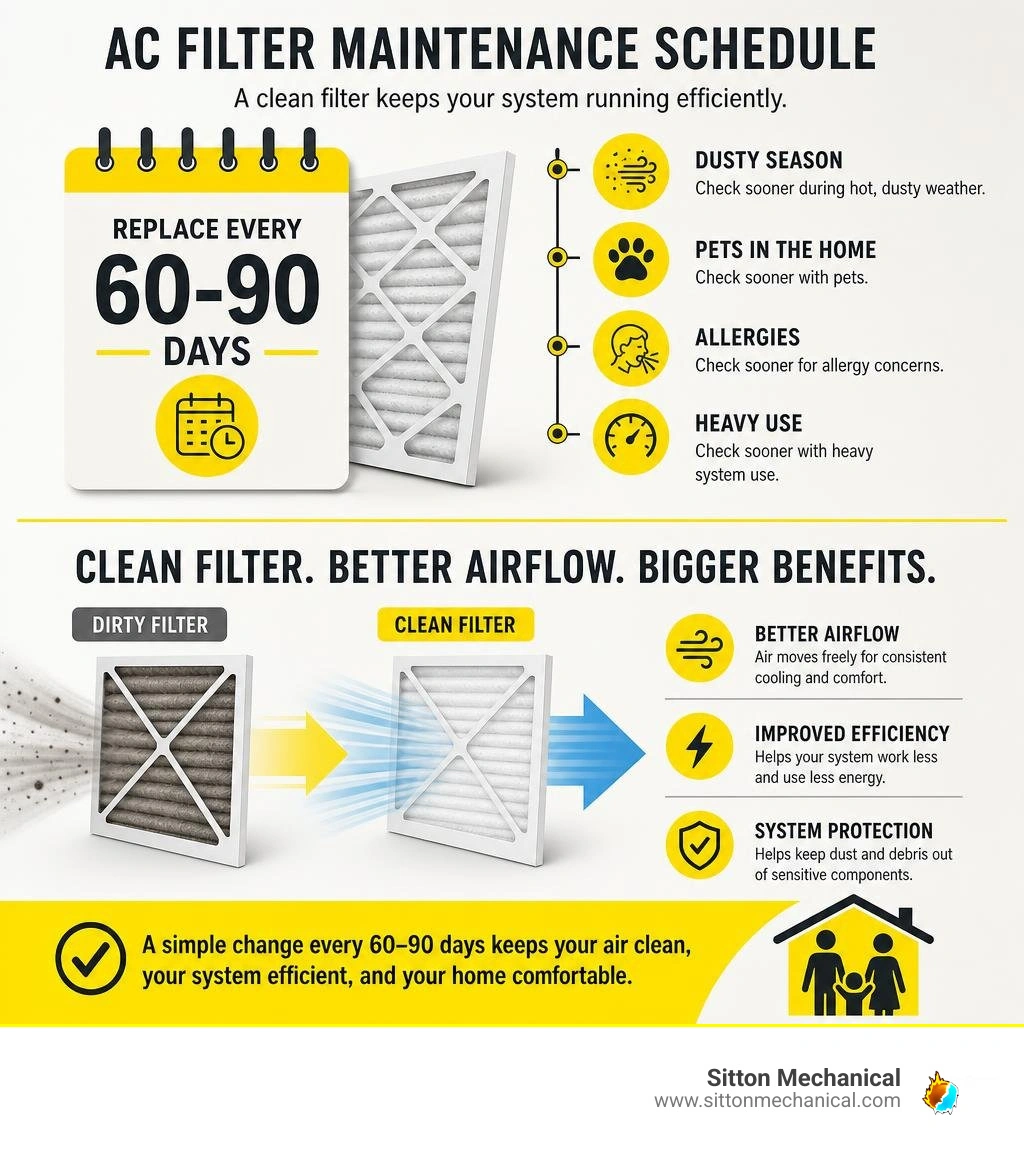
Quick ac filter replacement cushing definitions:
Key Signs You Need a New Air Filter
Recognizing when your air conditioner's filter is past its prime helps protect your cooling system and keeps indoor air fresh. When a filter fills up with trapped airborne dust, dirt, pollen, and pet dander, it gradually chokes off system airflow. Knowing what warning signs to watch for allows you to perform timely ac filter replacement in Cushing before major comfort problems develop.
- Dirty or Dusty Air Vents: If you notice a fine layer of dust settling around return grilles or supply registers shortly after cleaning, your filter has likely reached maximum capacity and can no longer trap micro-particles efficiently.
- Noticeable Drop in Airflow: When you stand near your supply vents and feel only a weak trickle of cool air instead of a strong breeze, a clogged filter is frequently the chief culprit restricting return air entry.
- Increased Household Allergens: Indoor air pollution levels can be two to five times higher than outdoor levels when dirty filters recirculate captured contaminants. Unexplained sneezing, throat irritation, or watery eyes point toward a filter swap requirement.
- Longer or Continuous Cooling Cycles: Because air cannot flow freely through dirty media, your cooling system struggles to draw in air and drop indoor temperatures, causing equipment to run continuously without reaching your thermostat setpoint.
- Frosting or Ice on Evaporator Coils: Severe air restriction prevents warm home air from passing across cooling coils. When heat absorption drops, moisture on coils can freeze solid, leading to potential cooling breakdowns that require professional attention like ac repair stillwater.
- Unusual Musty Odors: Humidity combined with trapped organic debris inside an old filter creates ideal conditions for stale, unpleasant smells whenever the blower fan kicks on.
Catching these signs early keeps your equipment running smoothly and prevents avoidable mechanical stress.
Step-by-Step How-To: AC Filter Replacement in Cushing
Performing routine ac filter replacement in Cushing is a simple process when you follow proper steps. Proper installation keeps air flowing correctly, prevents dirty air bypass around frame edges, and protects vital internal components.
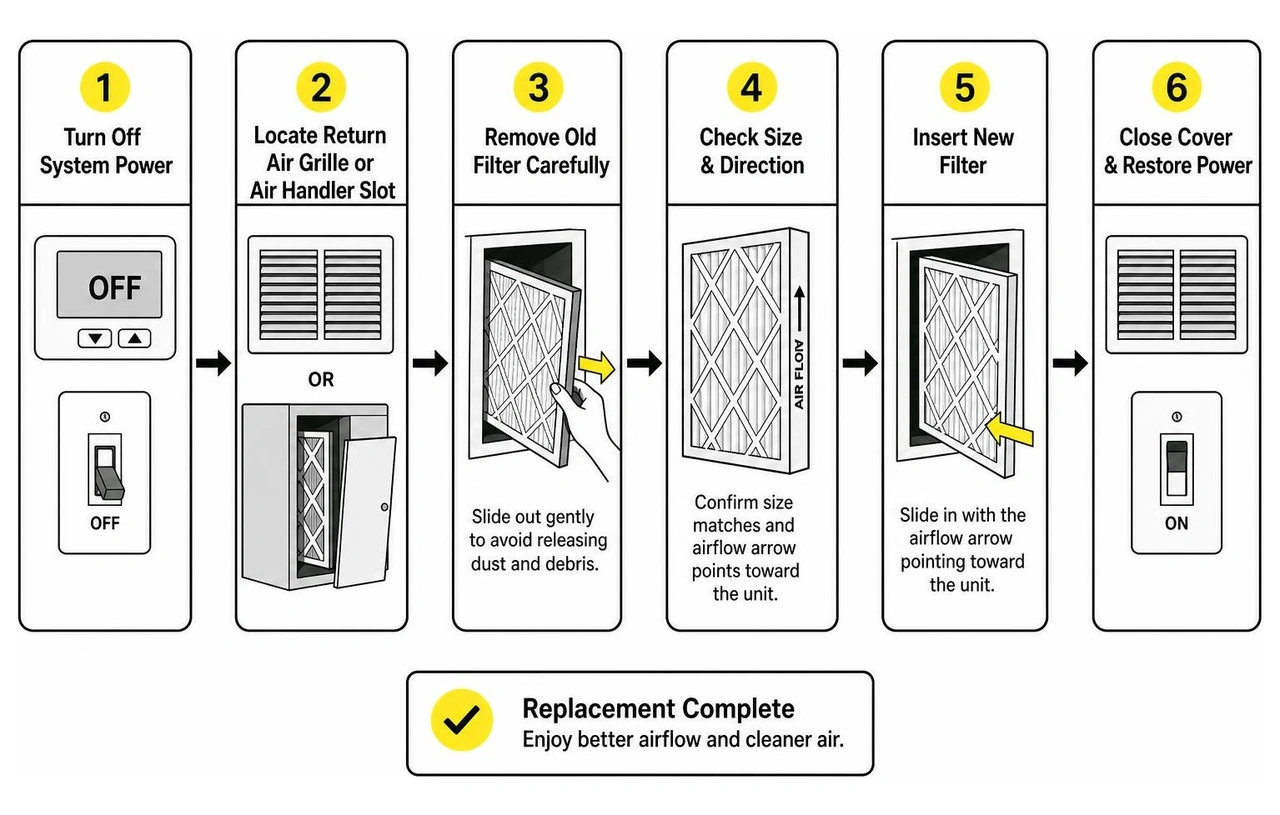
Here is a straightforward procedure for replacing your home's HVAC filter correctly:
- Turn Off System Power: Locate your thermostat and switch system settings to "OFF". For added safety during hands-on unit maintenance, turn off switch disconnects nearby or turn off the system breaker in your electrical main panel.
- Locate the Return Air Grille or Air Handler Slot: Central AC filters are typically installed in central wall/ceiling return air grilles or directly inside slot compartments along the indoor air handler or furnace cabinet.
- Remove the Old Filter Carefully: Unlatch panel fasteners or open grille hinges slowly. Slide out the dirty filter gently to prevent dislodging trapped dust and lint onto floors or carpeting.
- Measure Frame Dimensions: Read physical dimensions printed along cardboard filter margins (for example, 16x25x1 or 20x20x1). If dimensions are faded, measure width, length, and depth precisely using a tape measure.
- Verify Airflow Direction Arrows: Examine new filter casing edges for directional arrows depicting proper airflow. Arrows must always point toward the blower fan motor and furnace interior, moving away from return rooms.
- Insert New Filter Media: Slide the fresh filter squarely into mounting tracks or frame openings. Ensure edge gaskets sit flush without twisting, binding, or crushing frame cardboard.
- Secure Grille and Restore Power: Close return grilles, fasten panel latches securely, and restore power at circuit switches or main panels before setting thermostats back to desired cooling modes.
To select the ideal filter media type for your home's setup, compare standard efficiency tiers detailed below:
| Filter Type | Typical MERV Tiers | Capture Capabilities | Recommended Household Usage |
|---|---|---|---|
| Basic Fiberglass | MERV 1–4 | Large dust clusters, lint, carpet fibers | Minimal filtration; temporary system protection only |
| Standard Pleated Media | MERV 8–11 | Dust, pollen, mold spores, pet dander | Ideal balance for standard residential performance |
| High-Efficiency Pleated | MERV 12–13 | Fine dust, smoke, smog, allergen micro-particles | High-allergy relief; requires capable fan static pressure |
Sizing and Ratings for AC Filter Replacement in Cushing
Choosing an appropriate rating on the Minimum Efficiency Reporting Value (MERV) scale is critical to balance filtration efficacy with system static pressure requirements. The MERV rating scale runs from 1 to 16 for residential and commercial systems, measuring how effectively filter media captures particles between 0.3 and 10 microns in size.
While high-density filters capture smaller particles, dense media increases resistance against system fan motors. Basic flat fiberglass panels protect equipment from large debris but offer minimal air quality improvement. Higher-tier pleated filters utilize dense synthetic fibers to capture smaller airborne pollutants like ragweed, mold spores, and pet allergens.
Selecting a media rating between MERV 8 and MERV 11 generally provides ideal indoor air quality enhancements for Cushing residents without putting excessive static strain on standard residential blowers. Installing excessively restrictive MERV 13+ media into systems not designed for higher resistance can strain blower fans and drop total airflow across cooling coils. Reviewing expert hvac air filter tips stillwater helps ensure you select compatible filter media that protects both equipment performance and indoor air purity.
Major System Brands for AC Filter Replacement in Cushing
Different HVAC equipment manufacturers require specific filter sizes, media thicknesses, or media designs to perform at peak efficiency. Whether your home uses standard residential equipment or specialized high-efficiency configurations, matching factory specifications preserves component longevity and warranty protections.
- Carrier Cooling Systems: Carrier systems often feature specialized media cabinets designed for deep-pleated 3-inch to 5-inch filters. Utilizing proper thickness reduces pressure drop while providing extended replacement intervals up to 6 to 12 months.
- Trane Central Systems: Trane equipment frequently incorporates custom filter track dimensions or high-efficiency air cleaners. Proper original equipment specification sizing prevents unfiltered bypass air from dirtying internal components.
- Goodman HVAC Units: Goodman central split systems typically accept standard 1-inch or 2-inch pleated return filters. Maintaining clean media ensures steady airflow across primary evaporator coils to prevent freezing.
- Apartment and Condo Central Equipment: Multi-family properties often feature compact return air grilles or ceiling return plenums with restricted space constraints. Proper dimensional sizing prevents frame buckling and noise vibrations.
We handle filter configurations across all major system brands including Carrier, Trane, Goodman, York, and Rheem, ensuring equipment operates strictly within manufacturer specification limits.
Specialty Filtration: Window Units, Vehicles, and RVs
Effective cooling air filtration extends beyond central residential HVAC systems. Portable units, mobile homes, vehicles, and recreational equipment all rely on localized filtration to maintain clean airflow and comfortable interior environments.

- Window AC Units: Compact window air conditioners utilize washable foam mesh or removable frame filters positioned directly behind front plastic intake grilles. Cleaning or replacing these filter screens monthly prevents lint build-up on small cooling fins, eliminating rattling noises, weak cooling output, and damp odors.
- Vehicle Cabin Air Filters: Automotive air conditioning relies on dedicated cabin air filters located behind dashboard glove compartments or fresh air intake cowls. Replacing clogged cabin filters every 12,000 to 15,000 miles removes road dust, pollen, and exhaust fumes, restoring HVAC vent strength inside vehicle passenger cabins. Check vehicle cabin air filter care tips to identify signs of automotive filter wear.
- RV Air Conditioning Units: Low-profile rooftop RV cooling systems use small ceiling intake filter pads. Because travel trailers operate in dusty campgrounds, checking low-profile RV filter pads prior to road trips ensures steady airflow and prevents evaporator icing while traveling.
Whether servicing residential homes, mobile units, or custom filtration setups like filtration services, clean filters prevent dust build-up and maintain efficient airflow.
Frequently Asked Questions About AC Filter Replacement
How often should AC filter replacement in Cushing be scheduled?
Standard residential systems generally require ac filter replacement in Cushing every 60 to 90 days. However, ideal replacement cadence depends heavily on household environmental factors:
- Single Occupant Homes (No Pets): Every 90 days under light equipment usage.
- Average Suburban Homes (1 Pet): Every 60 days to manage shedding pet hair and organic dander.
- Homes with Multiple Pets or Allergy Sufferers: Every 30 to 45 days during peak allergy seasons or hot summer months.
- Dry, Dusty Seasons: Every 30 days when summer weather increases outdoor dust and airborne particulates.
Routine checks every 30 days allow you to evaluate filter dust build-up visually and replace dirty panels before system performance drops.
Can filter replacements be done for apartments and condos in Cushing?
Yes, professional filter replacement service applies to all residential property types, including apartments, townhomes, and condominiums. Multi-family residences often utilize compact air handlers positioned in utility closets or drop-ceiling return grilles.
Maintaining fresh filters in apartments reduces accumulated dust on return louvers, lowers energy consumption, and improves indoor air quality within shared building environments.
What specialized tools ensure optimal AC filter installation?
While replacing a standard filter requires basic physical access, HVAC technicians utilize professional diagnostic tools to measure system performance and verify proper airflow dynamics:
- Static Pressure Probes and Digital Manometers: Technicians measure static pressure drops across filter racks to confirm high-efficiency pleated filters do not create dangerous airflow restrictions.
- Video Endoscopes: Slim diagnostic cameras inspect evaporator coils positioned downstream from filter slots to check for dust leakage or coil fouling.
- Anemometers: Wind vane anemometers measure exact supply register air velocity to confirm airflow delivery returns to peak performance after installing fresh filters.
Integrating proper testing alongside routine maintenance like hvac maintenance stillwater ensures clean air filter installation without overburdening blower fan motors.
Conclusion
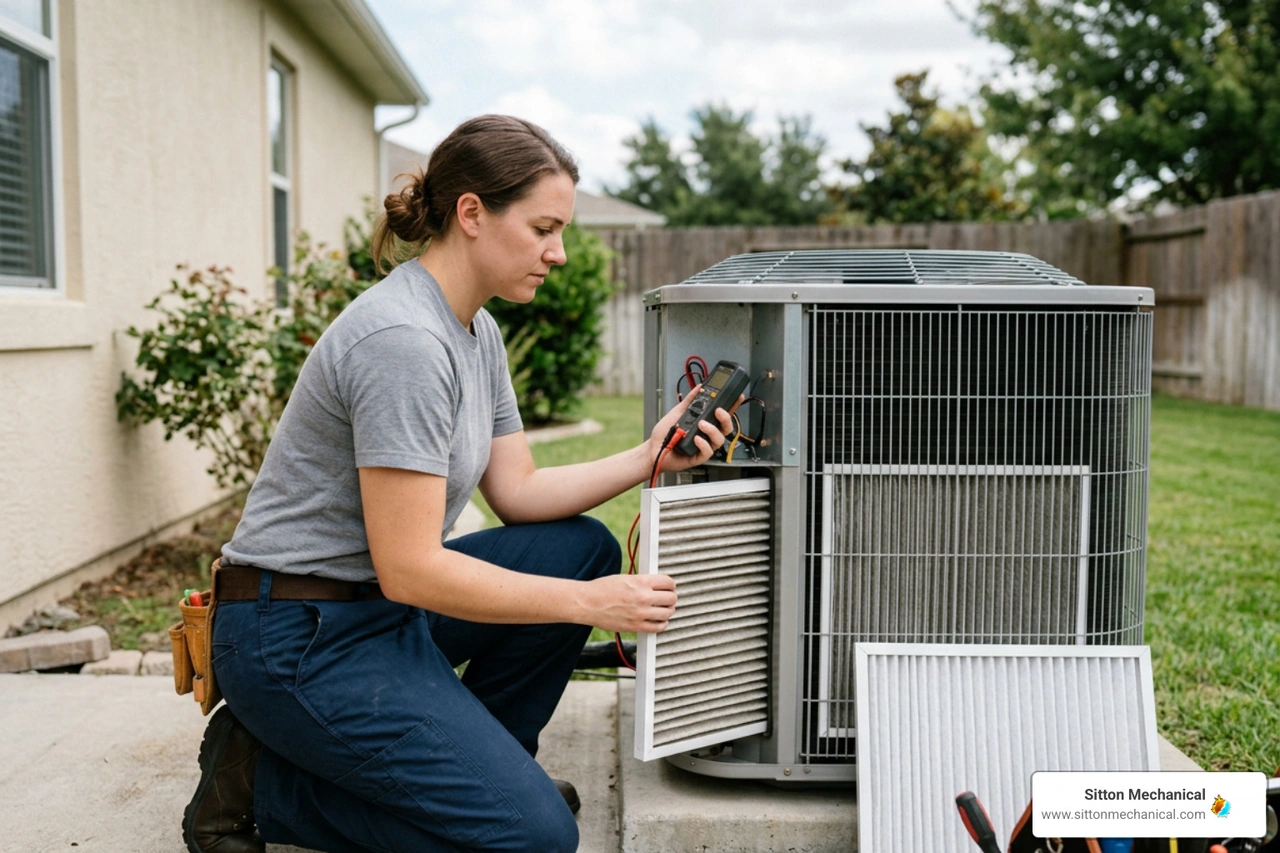
Regular ac filter replacement in Cushing is one of the easiest ways to protect your air conditioner, improve indoor air quality, and keep energy bills under control. Changing dirty filters prevents unnecessary system strain, protects internal components from harmful dust accumulation, and helps your cooling equipment run reliably throughout the hottest summer months.
At Sitton Mechanical, LLC, our certified team provides full-service heating, cooling, and air quality solutions backed by over a decade of hands-on experience. Whether you need routine system tune-ups, precision diagnostic checks, complete ac installation stillwater, or proactive local ac maintenance stillwater, we provide guaranteed workmanship and dependable service across Stillwater, Cushing, Perkins, Perry, Morrison, and surrounding communities.
Ready to enjoy cleaner indoor air and smooth cooling performance? Schedule expert local HVAC service in Cushing with our experienced technicians today!