
Why AC Filter Replacement in Stillwater Matters More Than You Think
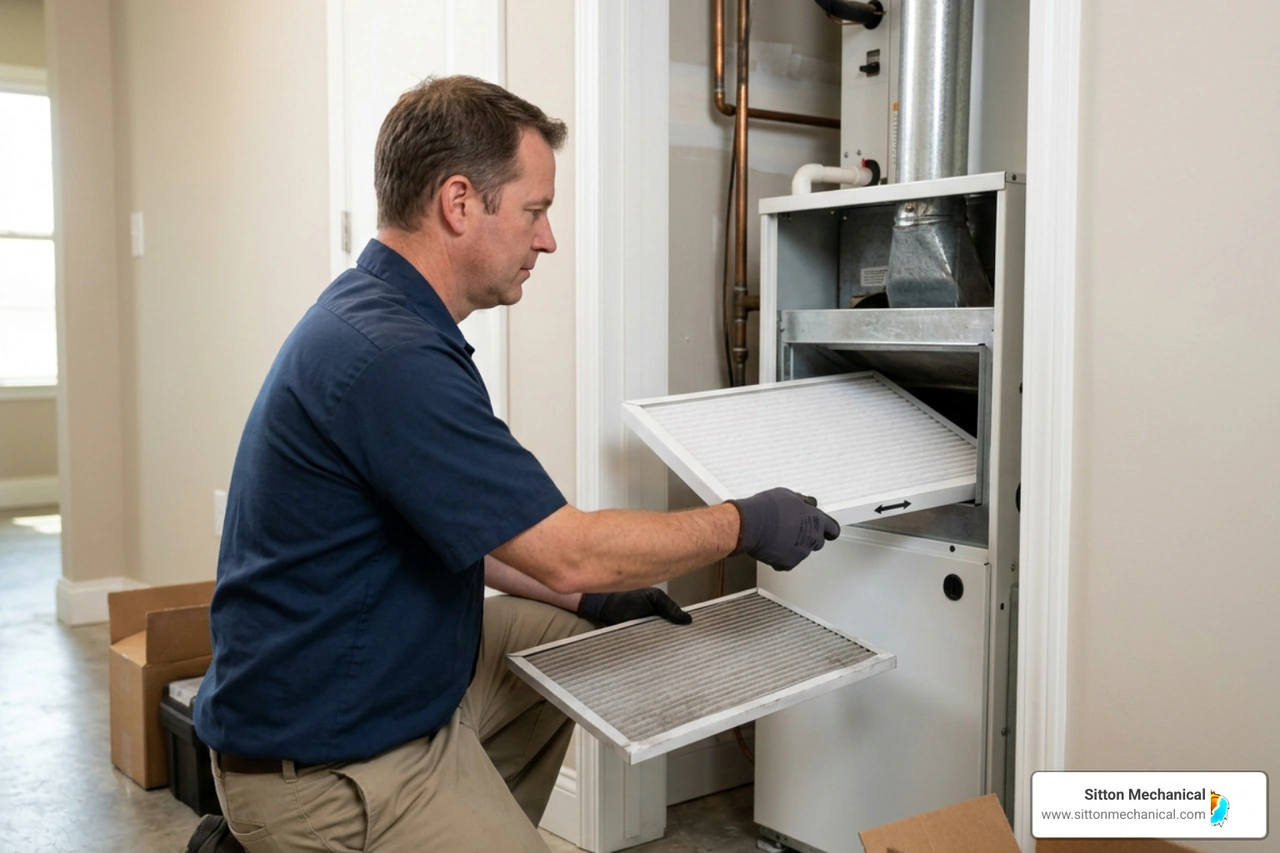
AC filter replacement in Stillwater is one of the simplest things you can do to protect your home's comfort and your HVAC system's health — especially with Oklahoma's intense summer heat and dusty air hitting hard in July 2026.
Here's a quick answer if you just need the basics:
- Replace standard 1-inch filters every 1–3 months
- Replace thicker filters (4–5 inch) every 6–12 months
- Check more often if you have pets, allergies, or a dusty home
- Signs you need a new filter now: weak airflow, musty smell, visible dust on vents, or rising energy bills
- Energy impact: a clean filter can reduce your AC's energy use by 5–15%
Stillwater summers are no joke. When temperatures climb and your AC runs almost nonstop, a clogged filter forces your system to work harder, use more energy, and wear out faster. It also means the air your family breathes is full of dust, pollen, and allergens that the filter should have been catching.
The good news? Fixing this takes about five minutes and a few dollars.
This guide walks you through everything — how often to replace your filter, which filter to choose, how to do it yourself, and when to call a pro.
Why AC Filter Replacement Stillwater is Essential
Your home's heating, ventilation, and air conditioning (HVAC) system is the heart of your indoor comfort. But it does more than just regulate temperature; it plays a critical role in managing the air you breathe. When we talk about ac filter replacement stillwater, we are looking at the single most cost-effective way to preserve your home’s indoor air quality and protect your wallet.
Dust Control and Allergen Reduction
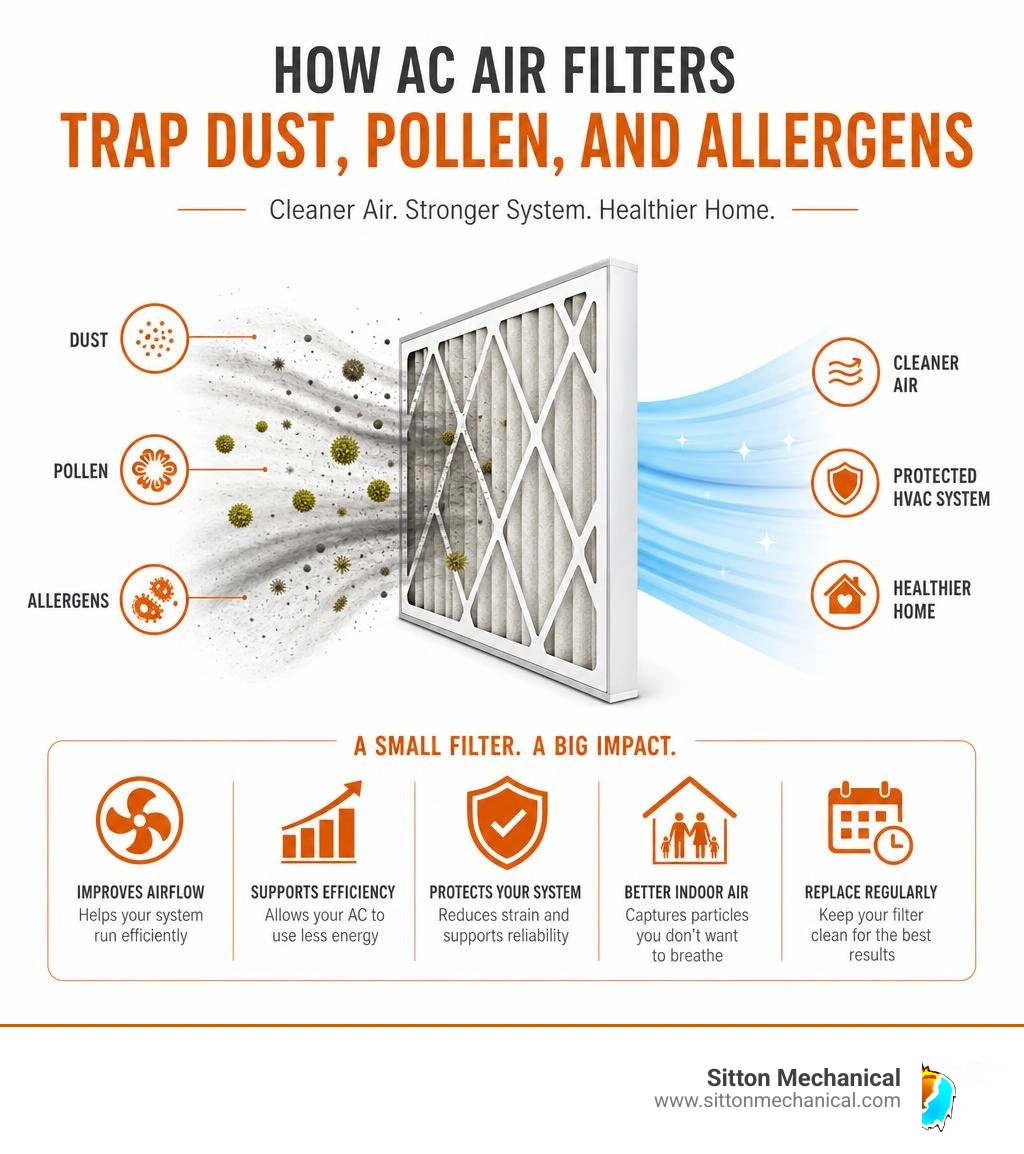
Oklahoma is famous for its windy days, red dirt, and seasonal pollen. When these outdoor elements make their way inside, your air filter acts as a shield. It traps airborne particles like dust mites, pet dander, mold spores, and outdoor pollen before they can circulate through your living spaces.
If you neglect filter replacement, that shield becomes saturated. Dust begins to settle on your furniture, your carpets, and inside your ductwork. For anyone in your home dealing with asthma or allergies, a dirty filter can trigger frequent flare-ups. Understanding the Importance of Air Filtration Systems is the first step toward creating a healthier, cleaner breathing environment for your family.
Airflow Efficiency and Energy Savings
Many homeowners believe the air filter is there to clean the air they breathe. While that is a wonderful side benefit, the primary job of the filter is actually to protect the internal components of your AC unit from dust buildup.
When a filter becomes clogged, it acts like a wall. The blower motor has to work twice as hard to pull air through the dense layer of dirt. This restriction in airflow causes two immediate problems:
- Higher Energy Bills: Your system runs longer and consumes significantly more power. In fact, replacing a dirty, clogged filter with a clean one can reduce your air conditioner's energy consumption by 5% to 15%.
- System Strain: The extra strain on the blower motor can lead to overheating and mechanical failure, shortening the overall lifespan of your expensive cooling system.
How Often to Replace Your Stillwater Home's AC Filter
There is no one-size-fits-all schedule for replacing your air filter. While the standard recommendation is "every three months," local factors in North Central Oklahoma can change this timeline dramatically.
Our hot summers, high humidity, and agricultural dust mean your system works hard. Additionally, your household's unique makeup plays a huge role in how quickly a filter fills up.

To help you stay on track, we have compiled a quick-reference guide based on typical household conditions in our service area, which includes Stillwater, Perkins, Morrison, Glencoe, Perry, Cushing, Mulhall, Orlando, Ripley, and Sumner.
| Household Type | Recommended Filter Replacement Frequency |
|---|---|
| Vacation Home or Single Occupant (No Pets/Allergies) | Every 6 to 12 months |
| Standard Suburban Home (No Pets) | Every 90 days (approx. 3 months) |
| Family Home with One Pet (Cat or Dog) | Every 60 days (approx. 2 months) |
| Multiple Pets or Family Members with Allergies/Asthma | Every 30 to 45 days (approx. 1 to 1.5 months) |
| During Peak Oklahoma Allergy Season or Dusty Construction | Every 30 days |
For more detailed strategies on keeping your system running smoothly, check out our HVAC Air Filter Tips Stillwater resource.
Signs You Need Immediate AC Filter Replacement Stillwater
Sometimes, you shouldn't wait for the calendar to tell you it is time for a change. Your HVAC system will drop hints when its filter is gasping for air. Keep an eye out for these common warning signs:
- Weak Airflow from Vents: If you hold your hand up to a supply register and the breeze feels more like a gentle sigh than a steady stream, your filter may be choked with dust.
- Visible Dust Accumulation: If you notice a fine layer of gray dust forming around your ceiling vents or on nearby furniture shortly after cleaning, your filter is likely full and letting bypass dust through.
- Musty Odors: A dirty filter can trap moisture, especially during humid Oklahoma summers. This creates a breeding ground for mold and mildew, leading to a stale, musty smell whenever the AC kicks on.
- Longer Cooling Cycles: If your air conditioner seems to run constantly without ever quite reaching your thermostat's target temperature, a restricted filter is likely slowing down the heat exchange process.
- Rising Utility Bills: If your power bills are climbing but your usage habits haven't changed, your system is working overtime to fight a dirty filter.
If you notice these signs and changing the filter doesn't resolve the issue, it may be time to look for professional help. You can learn more about identifying these system warnings in our guide on Signs You Need AC Maintenance.
Choosing the Right Filter for Your Stillwater HVAC System
Walking down the home improvement aisle can be overwhelming. There are dozens of different air filters, ranging from cheap fiberglass models to high-tech pleated options. To make the best choice, you need to understand MERV ratings.
MERV stands for Minimum Efficiency Reporting Value. This rating scale ranges from 1 to 20 and measures how effectively a filter traps particles of various sizes.
- MERV 1 to 4: Typically basic fiberglass filters. They protect your HVAC system from large dust bunnies but do very little to improve your indoor air quality.
- MERV 5 to 8: Standard pleated filters. These are highly recommended for most residential homes. They catch pet dander, mold spores, and pollen without restricting airflow too much.
- MERV 9 to 12: High-efficiency residential filters. These are excellent for households with severe allergies or multiple pets, as they trap smaller particles like fine dust and tobacco smoke.
- MERV 13 to 16: Typically used in hospitals and commercial spaces. These filters are very dense and can restrict airflow in standard residential HVAC systems unless the system was specifically designed to handle them.
To explore advanced filtration setups that integrate directly with your central heating and cooling, take a look at our dedicated page on Air Filtration Systems.
Common Air Filter Types Available for Your Home
- Fiberglass Filters: Affordable and disposable, but they offer minimal filtration. They must be replaced every 30 days.
- Pleated Media Filters: Made from polyester or cotton folds, providing more surface area to trap particles. They offer excellent filtration and last between 60 to 90 days.
- Electrostatic Filters: These use self-charging paper or polyurethane fibers to attract particles like a magnet. They are available in both disposable and washable versions.
- HEPA (High-Efficiency Particulate Air) Filters: The gold standard for air purification, trapping 99.97% of airborne particles down to 0.3 microns. Standard residential HVAC units usually require professional modification to use true HEPA filters due to airflow resistance.
Step-by-Step Guide to DIY AC Filter Replacement Stillwater
Replacing your AC filter is a quick task that almost any homeowner can handle. Here is our simple, step-by-step guide to doing it safely and correctly:
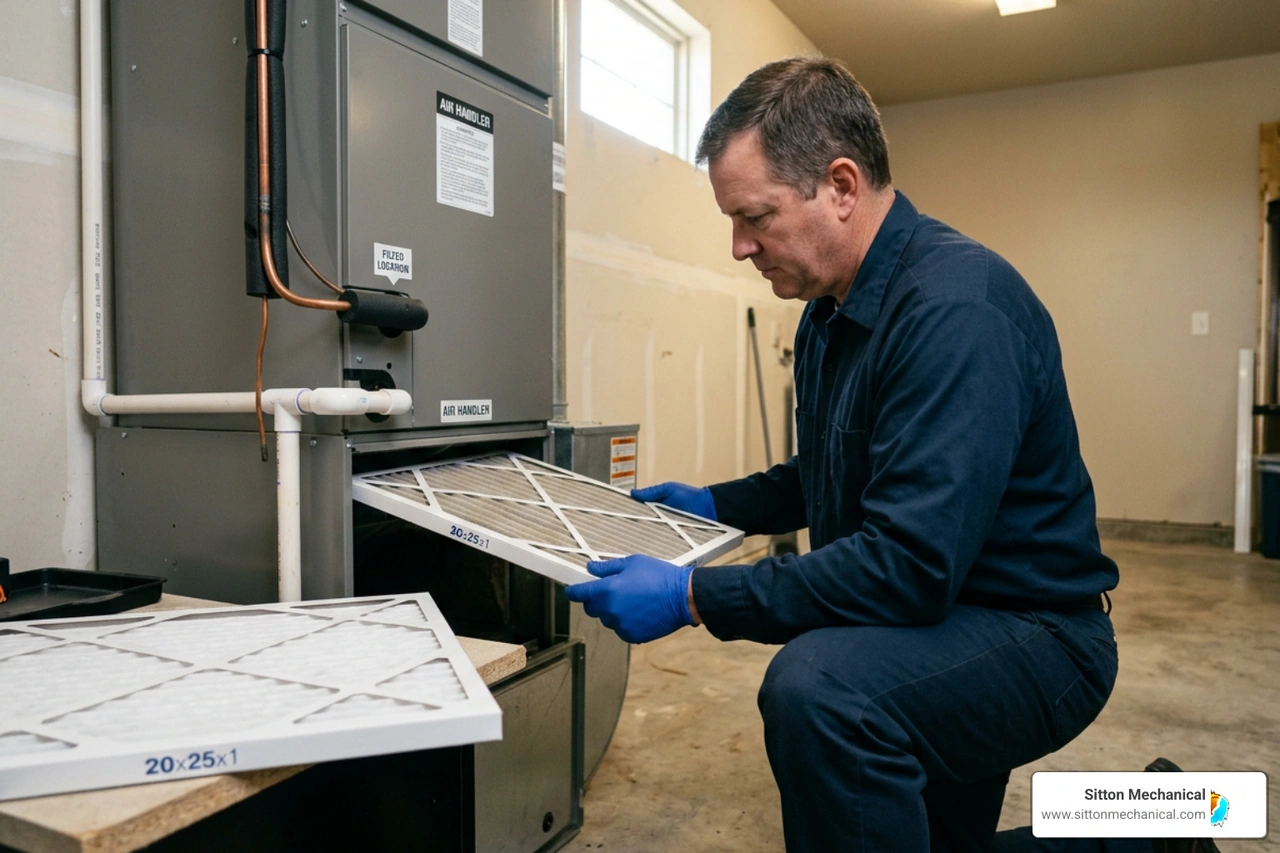
- Turn Off the System: Always shut off your HVAC system at the thermostat before touching the filter. This prevents the system from kicking on while the filter is out, which could draw unfiltered dust and debris directly into the blower motor.
- Locate the Filter: Your filter is typically located in one of three places:
- Inside a dedicated slot in the return air duct next to your furnace or indoor air handler.
- Behind a large return air grille on a central wall or ceiling.
- Inside the bottom of the air handler unit itself.
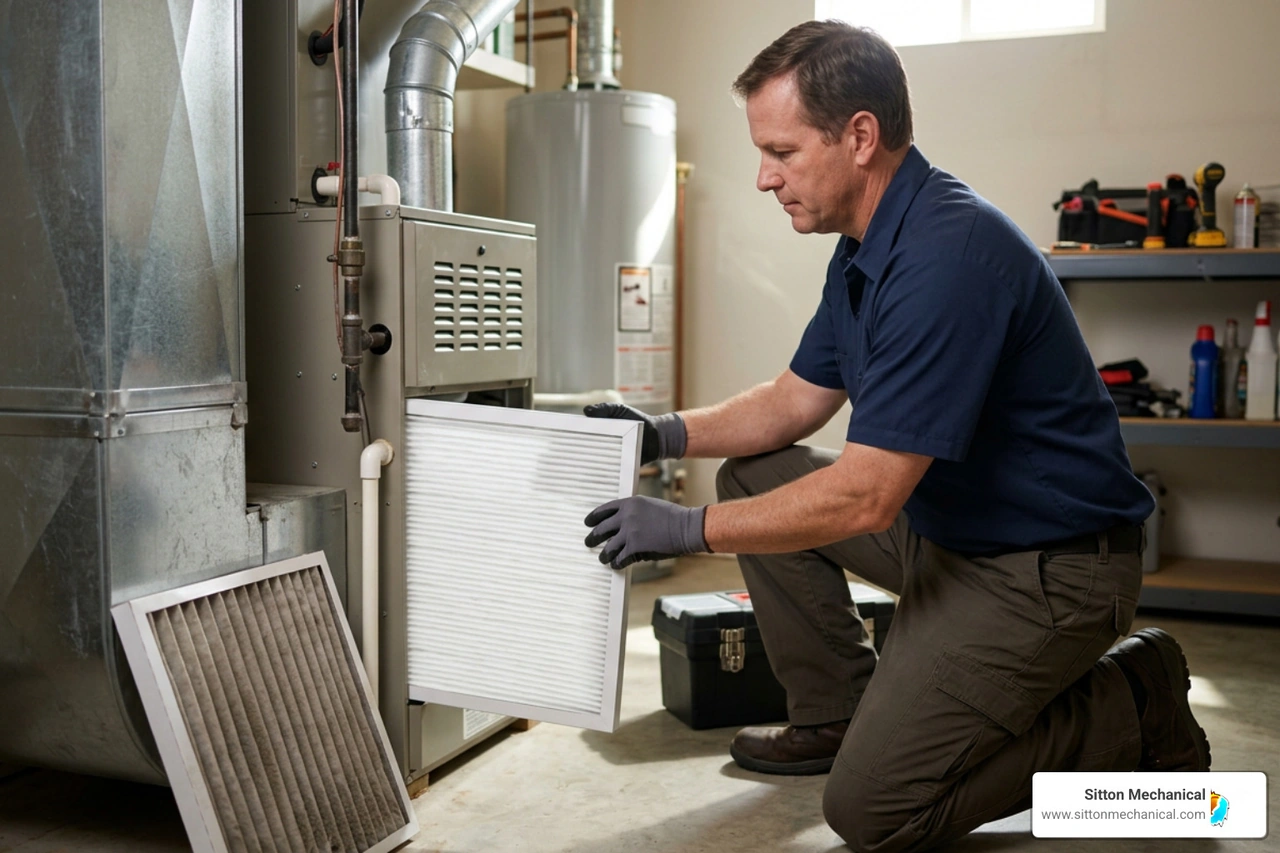
- Remove the Old Filter: Slide the old filter out of its housing. Take a moment to inspect it. If it is caked in dark gray dust, you timed the replacement perfectly (or might even be a little late!).
- Note the Airflow Direction: Look closely at the frame of the old filter. You will see printed arrows indicating the direction of airflow. Your HVAC system pulls air from your living spaces, through the filter, and into the unit. You must install the new filter with the arrows pointing toward the HVAC unit.
- Insert the New Filter: Slide the fresh filter into place, ensuring the airflow arrows are pointing in the correct direction. Make sure the filter fits snugly without bending or buckling. A loose fit allows dirty air to bypass the filter entirely.
- Secure the Cover and Turn the System On: Replace the access door or latch the return grille. Turn your thermostat back to your desired cooling setting, and enjoy the clean, fresh air!
Frequently Asked Questions About Stillwater Air Filters
Can a dirty air filter cause my AC to stop working?
Yes, absolutely. A severely clogged air filter restricts the warm indoor air from flowing over your system's evaporator coil. Without sufficient warm air passing over it, the refrigerant inside the coil gets too cold, causing the condensation on the coil to freeze solid.
Once your evaporator coil is encased in ice, your air conditioner will stop cooling your home entirely. It can also cause liquid refrigerant to flood back into the compressor, potentially destroying the most expensive component of your system. If your system has iced up or stopped working due to airflow neglect, you may need to schedule a professional AC Repair Stillwater to diagnose and resolve the issue.
What is the difference between a cabin air filter and a home AC filter?
While both filters serve the same basic purpose of cleaning the air, they operate in completely different environments.
A cabin air filter is designed for your vehicle's ventilation system. It cleans the air entering your car’s cabin through the heating and air conditioning vents, trapping road dust, exhaust fumes, and pollen. Automotive experts often recommend replacing this filter every 15,000 miles to maintain healthy ventilation. For local vehicle needs, residents might consult an Auto Air Filter Replacement, Stillwater, OK 74074 expert or look into auto-specific resources like an Air Filter Replacement Service in Morrison, CO to keep their vehicles in top shape.
A home AC filter, on the other hand, is much larger and is designed to handle the massive volume of air circulating through a residential building. Home filters are rated by MERV scales rather than mileage, and they require regular replacement based on months of use, pet occupancy, and indoor air quality needs.
How does regular filter replacement prevent major HVAC repairs?
Regularly replacing your air filter is the cornerstone of preventative maintenance. When your filter is clean, air flows freely, which keeps the internal components of your heating and cooling system running within their designed temperature and pressure limits.
By preventing dust from coating the blower motor, electrical contacts, and coils, you avoid the most common causes of system breakdowns. Think of it like changing the oil in your car — a small, regular chore that prevents catastrophic engine failure down the road. To keep your home comfortable year-round and protect your manufacturer warranties, pairing regular filter changes with professional HVAC Maintenance Stillwater is the smartest strategy.
Conclusion
Keeping your indoor air clean and your cooling system running efficiently doesn't have to be a chore. Regular ac filter replacement stillwater is a quick, easy, and highly effective way to protect your home's comfort, lower your energy bills, and avoid unexpected system breakdowns.
While changing your filter is an easy DIY task, it is only one part of a healthy HVAC routine. For complete peace of mind, your system should have a professional check-up once every twelve months to clean the internal coils, test electrical connections, and verify refrigerant levels.
At Sitton Mechanical, LLC, we bring over a decade of local experience to Stillwater, Perkins, Morrison, Glencoe, Perry, Cushing, Mulhall, Orlando, Ripley, and Sumner. Our team of screened and certified technicians is dedicated to keeping your home comfortable with upfront pricing, guaranteed work, and flexible financing options.
If you are looking for professional support beyond our local service area, you can find trusted resources like Orlando Air Filter Services | HVAC Filter Replacement Service or AC Repair and Service in Perry | E. Dake Plumbing & Heating LTD. . But right here in Payne County and the surrounding communities, we are your go-to local HVAC experts.
Ready to schedule your annual system tune-up or need help upgrading your home's air filtration? Explore our AC Maintenance Stillwater packages, read more about our comprehensive Air Conditioning Services Stillwater, or contact us today for reliable AC Repair Stillwater. Let us help you breathe easy and stay cool all summer long!